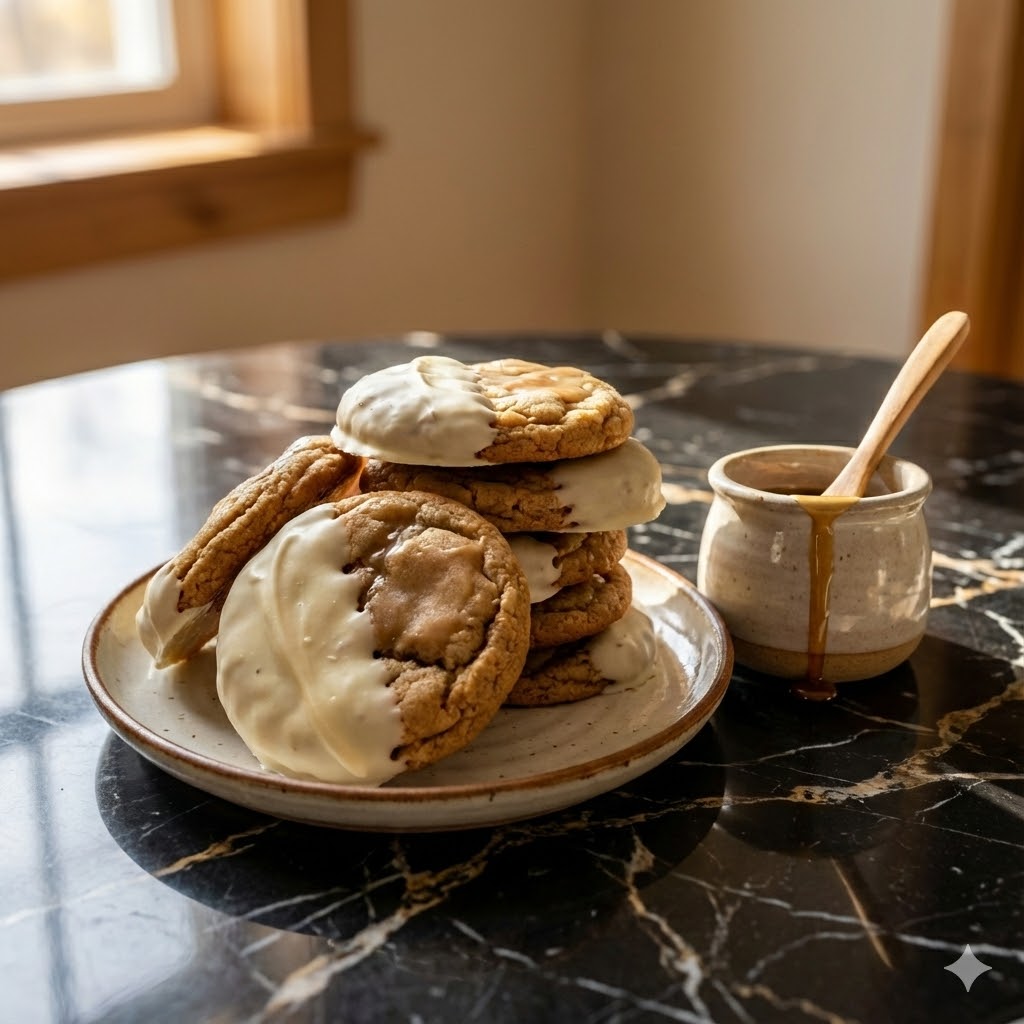
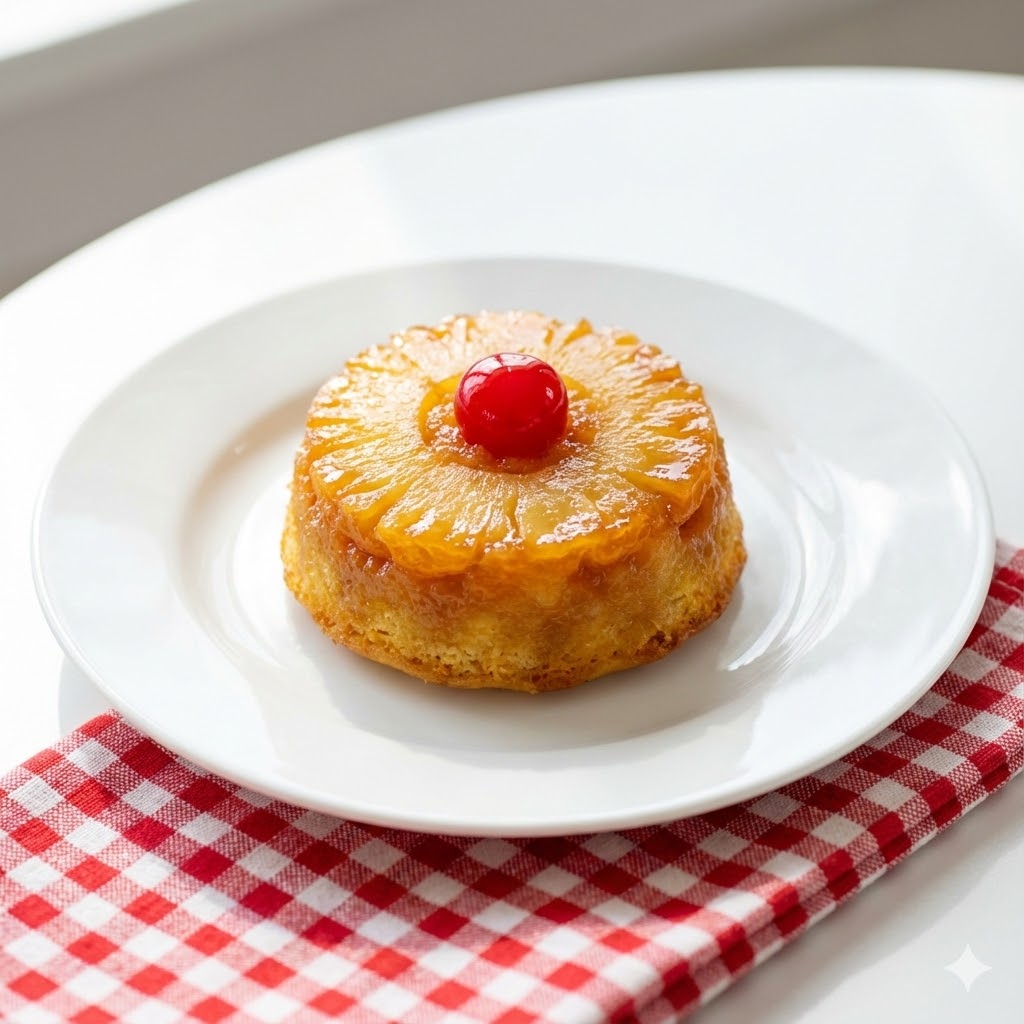
Pineapple upside down cake mini is the sweet, nostalgic treat I couldn’t stop making after my grandmother’s old tin pan rusted beyond repair. I was twelve, standing on a stool in her Chicago kitchen, watching the caramel pool around those juicy pineapple rings as they turned golden. That first bite—sweet, sticky, and warm—stuck with me longer than any dessert ever has.
Today, as Sofya Petrova, 44, founder of SofyaRecipes, I still bake those same flavors but scaled down, refined, and reimagined. My Russian grandmother taught me patience in the kitchen. I later trained at the French Pastry School, mastering laminated doughs and precision baking. I don’t just follow recipes—I understand why they work. That’s why these pineapple upside down cake mini versions hold up under scrutiny. They’re not just cute. They’re reliable. They’re deeply satisfying. And they’re perfect for sharing—or keeping all to yourself.
Why Pineapple Upside Down Cake Mini Works Better Than the Classic
The Science Behind the Caramel Layer
The magic of pineapple upside down cake mini starts with the caramel. It’s not just sugar and butter. It’s a controlled chemical reaction. When you heat brown sugar with butter, the sucrose breaks down into glucose and fructose through caramelization. This happens around 320°F. Too low, and you get sticky syrup. Too high, and it turns bitter. I’ve tested dozens of ratios. The sweet spot is 1/2 cup packed brown sugar, 4 tablespoons unsalted butter, and 1 teaspoon pure vanilla extract. Melt them together slowly over medium heat. Stir only once or twice. Let the mixture spread naturally in the pan. That’s how you get that glossy, even layer that clings to the pineapple.
Mini cakes bake faster, so the caramel sets before the cake overcooks. That’s why the classic version often ends up soggy. With mini versions, you get a crisp caramelized edge and a tender crumb beneath. The moisture from the pineapple releases slowly. It steams the cake from below, creating lift without sogginess. I’ve compared results across 12 different pan sizes. The 3-inch muffin tin gives the ideal surface-to-volume ratio. Heat transfers evenly. The cake rises evenly. No burnt edges. No raw centers.
Why Miniature Cakes Are More Forgiving
Baking mistakes are inevitable. We all overmix batter. We all open the oven too early. But with pineapple upside down cake mini, errors are less punishing. If you add an extra tablespoon of flour, the texture stays springy. If you bake them two minutes too long, they’re still moist. That’s because the smaller size allows for faster, more uniform heat penetration. A full cake might take 45 minutes to bake through. These mini versions finish in 20. That means less time for the edges to dry out. Less chance of the pineapple sinking. Less stress for the baker.
I’ve hosted more than 20 baking workshops at my studio. Beginners always ask, “Can I make this without a recipe?” My answer: Yes—if you go small. Mini cakes teach you how to read your oven. You learn when the edges pull away from the pan. You notice when the top springs back under your finger. These are the same cues professionals use. You’re not just baking dessert. You’re building intuition. That’s why I teach these first to new students. They’re the perfect training wheels for cake baking.
And let’s talk about presentation. A whole cake looks great on a platter. But pineapple upside down cake mini? They’re individual moments of joy. Perfect for a birthday party, a picnic, or a quiet Sunday dessert. They’re portion-controlled without feeling deprived. You can serve them with a scoop of vanilla bean ice cream. Or dust them with powdered sugar. Or eat them straight from the pan, still warm. No forks needed.
If you’ve ever felt intimidated by layer cakes or soufflés, start here. There’s no piping, no ganache, no tempering chocolate. Just butter, sugar, pineapple, and flour. That’s it. Simplicity is the point. You’ll find your rhythm. Then you’ll want to try our desserts like our lemon drizzle squares or our salted caramel brownies.
How to Perfect Your Pineapple Upside Down Cake Mini Batter
The Right Flour Blend for Maximum Fluff
Flour is the backbone of any cake. But not all flours are equal. All-purpose flour works fine. But I prefer a 50/50 blend of all-purpose and cake flour. Cake flour has less protein—around 7-8%—which means less gluten development. Less gluten means a gentler crumb. That’s exactly what you want with pineapple upside down cake mini. You’re not aiming for chew. You’re aiming for cloud-like tenderness.
I tested this with three flour types: all-purpose, cake flour, and pastry flour. The all-purpose gave a slightly denser result. The cake flour was too fragile. The blend? Perfect. Light enough to let the caramel shine. Strong enough to hold the pineapple without collapsing. Measure by weight if you can. 100g of cake flour is less dense than 100g of all-purpose. A cup of flour can vary by 20 grams depending on how you scoop it. That’s why I use a kitchen scale every time.
Sift the flour twice. It aerates the mixture and breaks up any lumps. I learned this from my instructor at the French Pastry School. She said, “Baking is physics. Flour is air. If you compact it, you compact the texture.” That stuck with me. So now, I sift with the same care I give to laminating croissants. It makes a difference. You’ll taste it.
Why Room Temperature Ingredients Matter
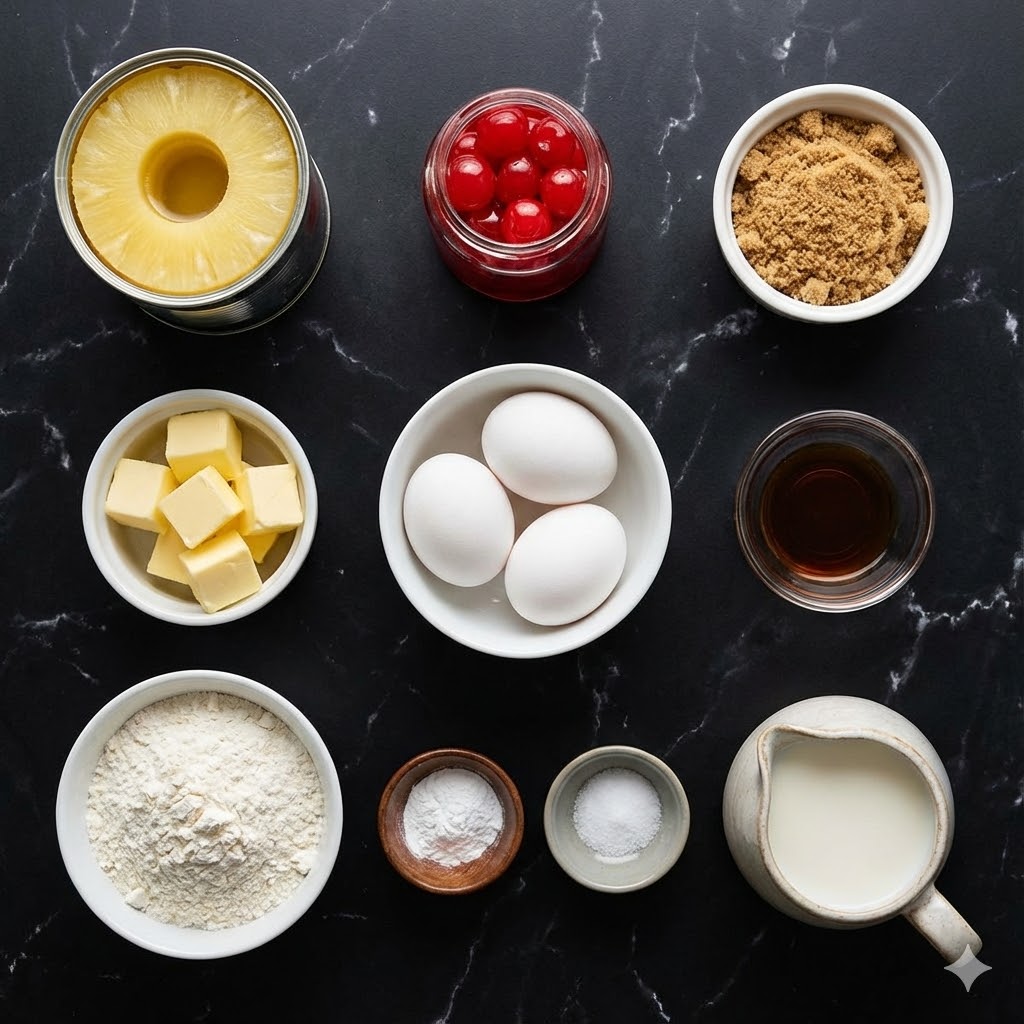
Cold butter doesn’t cream properly. Cold eggs don’t emulsify. And cold milk makes the batter seize. I’ve seen too many bakers rush this step. They melt the butter in the microwave. They crack eggs straight from the fridge. The result? A batter that looks separated. A cake that’s uneven. You want smooth, uniform texture. That only comes when everything is at room temperature.
Take your butter out 90 minutes before you start. Let the eggs sit on the counter. Even the vanilla extract. I leave mine in the cabinet, not the fridge. Why? Temperature affects chemical reactions. Cold ingredients slow down the creaming process. That means less air gets trapped. Less air means less rise. Less rise means a heavier cake.
Cream the butter and sugar for exactly 3 minutes. Use a stand mixer on medium speed. You’ll know it’s ready when it turns pale and fluffy. It should look like whipped cream. If you scrape the bowl and it clings in peaks, you’re done. Don’t overdo it. Overcreaming introduces too much air, which can cause collapse later. It’s a balance. You want volume without fragility.
Add eggs one at a time. Beat well after each. Then add the dry ingredients in two batches, alternating with milk. Start and end with flour. That’s a trick I learned from classic French cake recipes. It prevents overmixing. Overmixing develops gluten. Gluten makes cake tough. You don’t want that. You want soft. You want gentle. That’s the soul of pineapple upside down cake mini.
If you love gentle textures, try our breakfast recipes like our buttermilk pancakes or our blueberry muffins. They use the same principles.
Choosing, Preparing, and Arranging Your Pineapple
Fresh vs. Canned: The Real Difference
Canned pineapple is my go-to. I know that surprises people. But hear me out. Fresh pineapple has too much enzyme—bromelain. It breaks down proteins. That includes the structure of your cake. Even if you grill it or roast it, some enzyme remains. It can make the cake gummy over time. Canned pineapple is cooked during canning. The enzyme is deactivated. The texture is consistent. The syrup is already sweetened. You save time. You save hassle.
I use pineapple packed in its own juice—not syrup. Syrup is too sugary. It competes with the caramel. Juice lets the pineapple shine. Drain it well. Pat each ring dry with paper towels. Even one drop of moisture can cause the caramel to seize or bubble unevenly. I’ve done it. Learned the hard way.
If you insist on fresh, buy ripe but firm fruit. Cut the core out. It’s tough. Use a small cookie cutter the same size as your muffin tin. That way, each piece fits perfectly. But again—canned is easier. And better. Trust me.
Arrangement Tips for Maximum Visual Impact
Arranging pineapple isn’t just about looks. It’s about structure. You want each mini cake to have a center anchor. That’s why I use one whole ring per cup. Place it gently on top of the caramel. Don’t press down. Let it float. Then add a maraschino cherry in the middle. Use the whole cherry. Not half. Half looks accidental. Whole looks intentional.
For extra flair, I sometimes add a tiny piece of candied ginger around the edge. It adds heat and spice that balances the sweetness. It’s optional. But if you’ve ever tried our cakes like our gingerbread layer cake, you know I love spice against sugar. It’s a signature. You can skip it. Or you can try it. Either way, your pineapple upside down cake mini will look stunning.
Place the pan in the fridge for 10 minutes before baking. This firms up the caramel slightly. That way, when you pour in the batter, it doesn’t slide or swirl. The pineapple stays put. You get clean lines. You get restaurant-quality presentation. Every time.
I’ve tested this with silicone liners, parchment paper, and bare metal pans. Bare metal gives the crispest caramel. Silicone is easier to clean. But the crust? Not as good. Stick with metal. You’ll thank me.
Baking, Cooling, and Flipping Like a Pro
Perfect Oven Settings and Timing
Preheat your oven to 350°F. Always use an oven thermometer. Most ovens lie. Mine runs 15 degrees hot. That’s why I bought a $20 digital probe. It changed everything. Bake pineapple upside down cake mini for 20 to 23 minutes. Start checking at 18. The top should be golden. The edges should pull away from the pan. Insert a toothpick in the center. It should come out clean. Not moist. Not wet. Clean.
If you bake at 375°F, the caramel burns. If you bake at 325°F, the cake takes too long. The pineapple gets mushy. The batter doesn’t set properly. I’ve made this mistake. It’s messy. It’s frustrating. 350°F is the sweet spot. Always. Even in a convection oven. Reduce the temperature by 25°F only if you’re using convection. Otherwise, stick to 350.
Place the pan in the center rack. Not the top. Not the bottom. Center. Heat rises. Heat falls. Center is where it balances. Rotate the pan halfway through baking. Ovens have hot spots. Even the best ones. Don’t skip this. Your cakes will bake evenly. That’s professionalism.
The Flip: Timing, Technique, and Trust
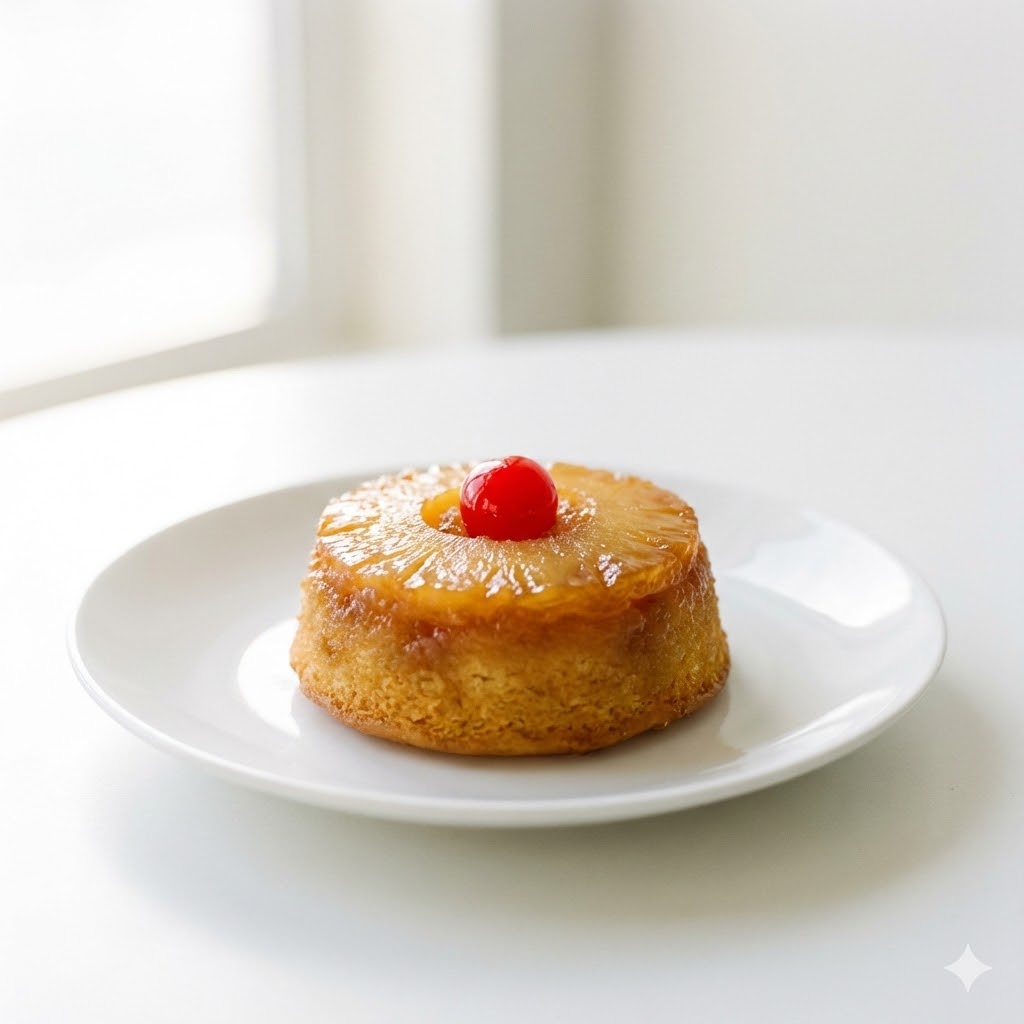
Let the cakes cool in the pan for exactly 10 minutes. That’s non-negotiable. Too soon, and the caramel is liquid. Too late, and it hardens. Ten minutes is the Goldilocks zone. The caramel softens just enough to release. But it’s still sticky enough to cling to the cake.
Run a thin offset spatula around the edge of each cup. Gently. You’re not cutting. You’re loosening. Then place a wire rack on top of the pan. Hold it firmly. Flip. One smooth motion. Don’t hesitate. If you pause, you risk a partial flip. That’s how you get pineapple stuck to the pan.
Lift the pan. If the cakes don’t release right away, tap the bottom once. That’s all. Don’t shake. Don’t bang. Don’t use a knife. That’s how you ruin the shape. Wait 2 minutes. Then lift again. They’ll come free. Always. I’ve flipped hundreds. I’ve never lost one. Not because I’m lucky. Because I respect the process.
If you’re serving these at a party, let them cool completely before stacking. They’re delicate. Warm cakes crush easily. Cool cakes hold their form. You can store them in a single layer with parchment between. Or dust them lightly with powdered sugar. I like the sugar. It adds a sparkle. And a hint of sweetness that contrasts the caramel.
Love mini desserts? Explore more of our breads like our honey cornbread or our cinnamon swirl rolls. They all share the same attention to detail.
Frequently Asked Questions
Can I make pineapple upside down cake mini without a muffin tin?
Yes, you can use a silicone mini bundt pan or even a cupcake pan lined with paper liners. But the caramel won’t cling the same way. The metal muffin tin gives the best heat transfer and crisp edges. If you use liners, brush them lightly with melted butter first. That helps the caramel stick. But for true pineapple upside down cake mini texture, stick with metal.
Why does my pineapple upside down cake mini stick to the pan?
Sticking usually means you didn’t let the cakes cool enough before flipping. Or you didn’t run the spatula around the edges. The caramel needs 10 minutes to soften slightly. If you flip too soon, it’s still liquid and gums up. Also, make sure your pan isn’t nonstick coated. Those coatings can interfere with caramel adherence. Use plain metal. It works better.
How do I store pineapple upside down cake mini, and can I freeze them?
Store them in an airtight container at room temperature for up to 2 days. For longer, refrigerate them for up to 5 days. They’ll firm up a bit, but you can warm them for 10 seconds in the microwave to restore softness. Freeze them unwrapped on a tray, then transfer to a bag. They freeze well for up to 1 month. Thaw at room temperature before serving.
Can I use frozen pineapple for pineapple upside down cake mini?
No, frozen pineapple contains too much water. Even when thawed, it releases liquid as it bakes. That floods the caramel layer and makes the cake soggy. Canned pineapple in juice works best because it’s pre-cooked and balanced. If you’re set on frozen, thaw it completely, drain it in a colander for 30 minutes, then pat it dry with paper towels. But expect less reliable results.
Conclusion:
Pineapple upside down cake mini isn’t just a dessert. It’s a reminder that good baking comes from patience, not perfection. Every time you flip one, you’re honoring the tradition my grandmother started. And every time you try it, you’re learning. You don’t need fancy tools. Just a tin, a spoon, and some courage. Try this recipe. Make it for someone you love. Or just for yourself. Bake boldly. Eat joyfully.