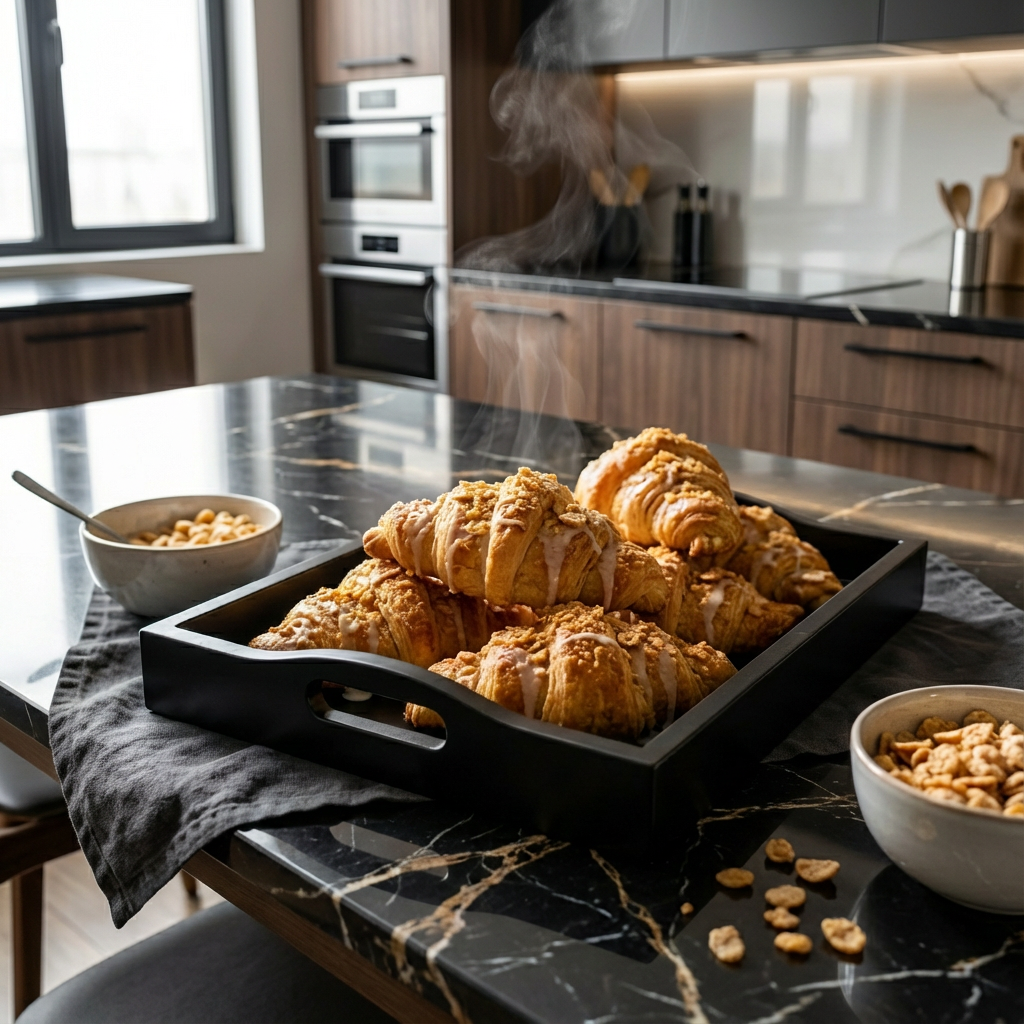
Cereal Milk Croissants: A Creamy, Crunchy Twist on a Classic

cereal milk croissants recipe featured image
Photo of author
Author: Mark chen
Published:

Cereal milk croissants are the delicious fusion of childhood nostalgia and pastry perfection. I still remember the first time I tasted them—sitting at my grandmother’s kitchen table in Chicago, crunching through a bowl of sweetened cereal while she rolled out dough for her famous butter croissants.

The milk at the bottom of my bowl tasted different—richer, sweeter, somehow more alive. That moment stuck with me. Years later, after training at the French Pastry School and spending countless nights testing laminated doughs, I realized: what if that cereal milk wasn’t just for drinking? What if it became the heart of the croissant itself? That’s how my cereal milk croissants were born.

Sofya Petrova, a 44-year-old Chicago native, is a passionate baker and founder of SofyaRecipes. Influenced by her Russian grandmother, she discovered her love for baking early and later trained at the French Pastry School. Specializing in laminated doughs, Sofya combines technical skill with creative flair, embracing both the science and emotion of baking.

Through her platform, she shares globally inspired, rigorously tested recipes aimed at making bold, nourishing flavors accessible to all. She champions persistence, learning through mistakes, and finding joy in every bake. These croissants aren’t just sweet—they’re a memory baked into buttery layers.

How to Make Cereal Milk Croissants from Scratch

The Science Behind Cereal Milk Infusion

Cereal milk isn’t just leftover liquid—it’s a flavor powerhouse. When you soak cereal in cold milk, the starches break down slowly, releasing sugars, fats, and aromatic compounds. This process is called cold infusion, and it’s gentler than heat. Heat can destroy delicate flavors, but cold keeps them bright. I use corn flakes and rice krispies for their crisp texture and mild sweetness.

The corn flakes add a toasty note, while the rice krispies dissolve neatly, thickening the milk without making it gummy. You need at least four hours, but overnight is ideal. Stir the mixture once halfway through. This isn’t magic; it’s chemistry. The milk absorbs the cereal’s essence, turning into a creamy, golden liquid that becomes the backbone of your dough.

Building the Perfect Laminated Dough

Laminated dough is all about layers. Butter and flour should be at the same temperature—cool, not cold. If the butter is too hard, it will tear the dough. If it’s too soft, it will melt into the flour and ruin the layers. I use European-style butter with 82% fat. It holds its shape better and gives a richer flavor.

Start with a basic French bread dough: flour, water, salt, yeast, and a touch of sugar. Mix until smooth, then rest for 30 minutes. Roll it out into a rectangle. Place the chilled butter block in the center, fold the dough over it like an envelope. Chill for an hour. Repeat the rolling and folding process two more times, chilling between each. Each fold creates more layers. Three folds mean 81 layers.

That’s why your croissant flaky. After the final fold, chill the dough overnight. Patience is non-negotiable. Rushing this step leads to sticky dough and flat croissants. If you’re new to laminated dough, try our basic croissant guide first. It walks you through every fold with photos and tips.
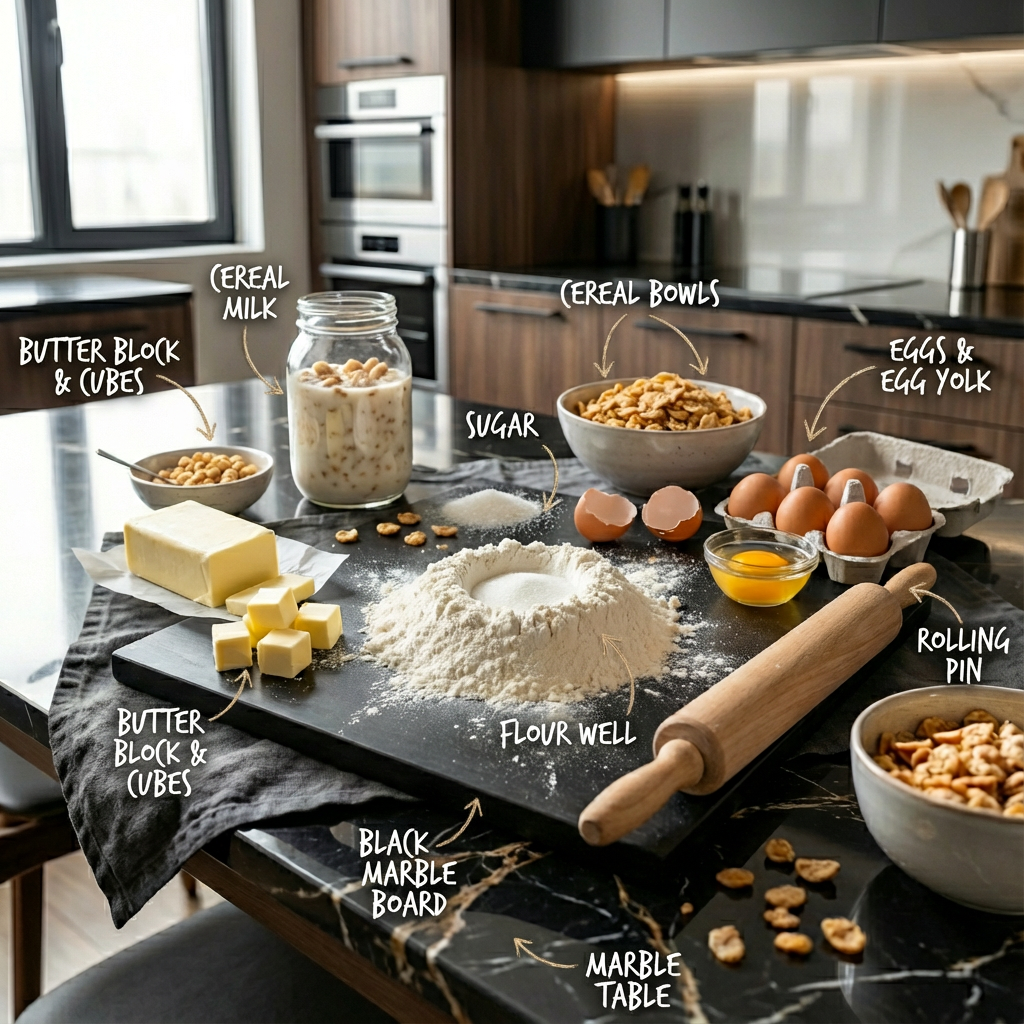
cereal milk croissants ingredients
All the ingredients needed to make cereal milk croissants from scratch.

Cereal Milk Croissants: Technique That Makes All the Difference

Shaping for Maximum Flakiness

Shaping is where many bakers lose their croissants. After your dough has rested overnight, roll it out to a 12×18-inch rectangle. Cut it into triangles, each about 4 inches wide at the base. Don’t use a ruler. Trust your eye. The slight irregularity adds charm. Brush the base of each triangle gently with cereal milk. This step is crucial—it adds moisture and flavor deep into the dough.

Roll each triangle from base to tip, tucking the tip under slightly. Don’t pull or stretch. Let the dough roll naturally. Place the shaped croissants on parchment-lined trays. Cover with a damp towel and let them proof for 2 to 3 hours. They should nearly double in size. A gentle poke should leave a slow indentation. If they spring back immediately, they need more time. If they collapse, you’ve overproofed.

That’s why I always check them in the morning before work. Waiting is part of the process. You’re not baking—you’re cultivating. If you love this method, explore our dessert breads collection for more patient bakes.

Baking to Golden Perfection

Preheat your oven to 375°F. Use a convection setting if you have one—it circulates heat evenly. Bake the croissants for 15 to 18 minutes. Rotate the tray halfway through. You want a deep golden brown, not pale yellow. The edges should look crisp. The top should crack slightly along the folds.

That’s the sound of butter releasing steam. It’s music to a baker’s ears. As soon as they come out, brush them lightly with more cereal milk. This glaze locks in moisture and adds shine. Let them cool for at least 20 minutes. Cutting into them too soon releases steam and makes them gummy.

I’ve learned this the hard way. One batch ruined by impatience taught me more than any class did. Now I wait. Always. Even if the house smells like heaven. These croissants are best enjoyed the same day. But if you must store them, freeze them before glazing. Reheat in a 350°F oven for 8 minutes.

serving cereal milk croissants with coffee
Buttery cereal milk croissants served warm with honey and berries.

Customizing Your Cereal Milk Croissants

Flavor Variations That Work

You don’t have to stick with classic corn flakes. Experiment with different cereals to change the character of your croissant. Frosted flakes give a stronger vanilla note, while bran flakes add earthiness. I’ve tried chocolate puffs—they melt into the dough and create pockets of dark sweetness.

But be careful. Chocolate cereals can make the dough sticky. Reduce the sugar in your dough by 10% if you go this route. For a nutty twist, try crushed corn nuts mixed into the milk. They crunch softly after baking. You can even add a pinch of cinnamon or cardamom to the milk while it steeps.

These spices deepen the flavor without overwhelming it. Another favorite variation: swap half the milk for oat milk. It adds a subtle creaminess and works beautifully with granola-based cereals. If you’re vegan, use a plant-based butter and oat milk. Vegan pastry guide has all the substitutions you need. Don’t be afraid to mix and match. Baking is experimentation. The best recipes come from curiosity, not perfection.

Pairings and Serving Ideas

These croissants shine on their own. But they’re even better with simple pairings. Serve them with a drizzle of honey or a smear of salted butter. A cup of strong coffee cuts the sweetness without competing. I love them with a side of fresh berries. The tartness balances the richness.

For a brunch spread, place them next to our Lemon Poppy Seed Cupcakes and a bowl of Greek yogurt. Add some sliced peaches and mint for color. They’re also excellent dipped in warm chocolate sauce. Or crushed into a trifle with whipped cream and jam. I’ve made them for holidays, birthdays, and quiet Sunday mornings.

They feel special without being fussy. One of my regulars at the farmers’ market says they remind her of her childhood cereal boxes. That’s the goal—not fancy, not expensive, but deeply comforting. The best food connects you to someone you love. These croissants do that. They hold warmth, memory, and a little crunch.

serving cereal milk croissants with coffee
Buttery cereal milk croissants served warm with honey and berries.

Storage, Troubleshooting, and Common Mistakes

How to Store and Reheat Cereal Milk Croissants

These croissants are best enjoyed fresh. But if you have leftovers, store them in an airtight container at room temperature for up to two days. Avoid refrigerating them. Cold air dries out the layers and makes them tough. For longer storage, freeze them before the final glaze. Wrap each croissant individually in parchment paper, then place in a freezer bag. They’ll keep for up to three months.

To reheat, preheat your oven to 350°F. Place the frozen croissants on a tray and bake for 10 to 12 minutes. Let them cool for five minutes before glazing. You can also use a toaster oven—it gives a crispier crust. Never microwave them. Microwaving turns flaky pastry into rubber. I learned this after accidentally microwaving a batch for my nephew. He cried. I laughed. We tried again the next day. That’s baking. You mess up. You fix it. You keep going.

Troubleshooting Common Baking Issues

If your croissants don’t rise, your yeast might be old or your water too hot. Always check your yeast’s expiration date. Use water around 95°F. Too cold, and the yeast won’t activate. Too hot, and it dies. If your dough is too sticky, add flour in small pinches while rolling. Don’t overdo it. Too much flour makes the croissants dense. If the butter leaks out during rolling, your dough is too warm.

Chill it for 30 minutes before continuing. If the layers collapse after baking, you likely overproofed. The dough was too airy. Next time, proof in a cooler spot. I use my oven with just the light on. It’s about 78°F—perfect. If the croissants burn on top but stay pale inside, your oven runs hot. Place a baking sheet on the bottom rack to shield the heat.

If they’re too dry, you didn’t brush enough cereal milk on the base before rolling. That liquid becomes steam during baking. It keeps the inside tender. I track every batch in a notebook. Temperature. Time. Humidity. Small changes make big differences. Baking isn’t guesswork. It’s observation.

Frequently Asked Questions

Can I use store-bought croissant dough for cereal milk croissants?

Yes, you can use high-quality store-bought croissant dough for cereal milk croissants. Skip the lamination steps and simply roll the dough out. Brush it with cereal milk before shaping, and proceed with proofing and baking.
The flavor will still be delicious, though the layers won’t be as distinct as from scratch. For best results, choose a brand with real butter, not margarine.

What cereals work best for cereal milk croissants?

Corn flakes and rice krispies deliver the cleanest flavor and best texture for cereal milk croissants. Avoid overly sugared or chocolate-coated cereals unless you adjust the recipe’s sugar.
Crunchy, lightly sweetened options give the milk a balanced taste without overpowering the buttery dough. Toasted oats or puffed quinoa also work well for a healthier twist.

How long do cereal milk croissants last, and can I freeze them?

Cereal milk croissants stay fresh for two days at room temperature in an airtight container. Freeze them before glazing for up to three months. Thaw overnight, then reheat at 350°F for 10 minutes.
Brush with fresh cereal milk after reheating to restore moisture. Never refrigerate them—they dry out quickly and lose their flaky texture.

Why are my cereal milk croissants dense instead of flaky?

Dense cereal milk croissants usually come from under-proofing, too much flour, or butter that melted into the dough.
Make sure your dough rests long enough between folds. Keep everything cool. Use cold butter and chill the dough after each turn. If the butter leaks while rolling, stop and chill for 30 minutes. Patience builds layers—and flakiness.

Conlusion :

Cereal milk croissants are more than a recipe—they’re a bridge between memory and craft, nostalgia and precision. Every fold of buttery dough, every hint of toasted cereal, carries the warmth of mornings at my grandmother’s table and the lessons learned through years of baking. This cereal milk croissants recipe celebrates the beauty of patience, the science of lamination, and the simple joy of transforming everyday ingredients into something extraordinary.

Whether you’re a weekend baker or a seasoned pastry lover, making these croissants from scratch is an act of care. It’s proof that even the simplest childhood flavors can evolve into something elegant when mixed with time, curiosity, and heart. Don’t worry if your first batch isn’t perfect—each attempt teaches you something new about your hands, your oven, and your rhythm. That’s the quiet magic of baking.

Serve these flaky, golden pastries to the people you love most. Watch their faces as they bite through the crisp layers and taste the sweetness of cereal milk folded deep inside. That’s when you’ll realize this isn’t just breakfast—it’s a memory reborn, one you’ve created with your own effort and warmth.

So, keep experimenting. Try different cereals, infuse new flavors, share your results online, and pass this recipe forward. The best dishes tell stories that travel far beyond the kitchen. Let this one be yours.

Because sometimes, a cereal milk croissant isn’t just a pastry—it’s proof that comfort, creativity, and connection can rise together, layer by buttery layer.

Print
clock clock iconcutlery cutlery iconflag flag iconfolder folder iconinstagram instagram iconpinterest pinterest iconfacebook facebook iconprint print iconsquares squares iconheart heart iconheart solid heart solid icon
serving cereal milk croissants with coffee

Cereal Milk Croissants: A Creamy, Crunchy Twist on a Classic


5 Stars 4 Stars 3 Stars 2 Stars 1 Star

No reviews

  • Author: Mark Chen
  • Total Time: 2 hours 30 minutes
  • Yield: 12 croissants 1x
  • Diet: Vegetarian

Description

Flaky, buttery, and filled with nostalgic cereal flavor, this cereal milk croissants recipe turns childhood breakfast into a bakery-level pastry.


Ingredients

Scale

2 ½ cups all-purpose flour

1 cup cold butter (82% fat)

1 cup cereal milk (made with corn flakes and rice krispies)

¼ cup sugar

2 tsp instant yeast

1 tsp salt

1 egg (for egg wash)


Instructions

1. Make cereal milk by soaking cereal in milk overnight, strain well.

2. Prepare dough with flour, sugar, yeast, salt, and cereal milk.

3. Rest dough for 30 minutes, then laminate with butter.

4. Roll and fold three times, chilling between folds.

5. Shape into croissants, proof 2-3 hours.

6. Bake at 375°F for 15–18 minutes until golden brown.

7. Brush with cereal milk after baking and cool 20 minutes.

Notes

For extra flavor, try adding cinnamon or cardamom to your cereal milk.

Freeze unbaked croissants before proofing for up to 3 months.

  • Prep Time: 1 hour
  • Cook Time: 18 minutes
  • Category: Breakfast, Pastry
  • Method: Baking
  • Cuisine: French-American

Nutrition

  • Serving Size: 1 croissant
  • Calories: 320
  • Sugar: 10g
  • Sodium: 180mg
  • Fat: 18g
  • Saturated Fat: 11g
  • Unsaturated Fat: 6g
  • Trans Fat: 0g
  • Carbohydrates: 34g
  • Fiber: 2g
  • Protein: 6g
  • Cholesterol: 45mg
SOFYArecipes
Sofya Petrova

SofyaRecipes is a baking site by Sofya Petrova, blending old-world traditions with modern technique through bold, approachable recipes

You Might Also Like...

Leave a Comment

Recipe rating 5 Stars 4 Stars 3 Stars 2 Stars 1 Star

Cereal Milk Croissants: A Butter-Soft Breakfast Dream

Photo of author
Author: admin
Published:
Updated:

Cereal milk croissants are the breakfast treat I never knew I needed until I tasted one fresh from the oven. It was a rainy Tuesday in Chicago, and I was testing a new batch of laminated dough when I remembered my grandmother’s kitchen in Moscow—how she’d pour the last drops of milk from a bowl of cornflakes into her tea, savoring every last sweet, milky note. That memory sparked an idea: what if I used cereal milk not just as a flavoring, but as the heart of a buttery, flaky croissant? After months of trials, failures, and flour-dusted aprons, I nailed it. Cereal milk croissants now sit at the core of my recipe collection. I’m Sofya Petrova, a 44-year-old Chicago native and founder of SofyaRecipes. My love for baking began in my grandmother’s kitchen, where even simple things like stirring dough felt sacred. Later, I trained at the French Pastry School, mastering laminated doughs with precision and discipline. I’ve spent years blending Russian warmth with French technique, turning comfort into craft. Through my recipes, I don’t just share methods—I share the quiet joy of making something beautiful from simple ingredients. If you’ve ever loved the last sip of milk from your childhood cereal bowl, these croissants are for you.

How Cereal Milk Croissants Transform Classic Pastry

The Science Behind Cereal Milk Infusion

Cereal milk isn’t just leftover liquid—it’s a concentrated flavor bomb. When you soak crispy cereal in cold milk, the sugars, oils, and toasted notes leach out slowly. This creates a creamy, aromatic base that carries nostalgia in every drop. For these croissants, I use cornflakes, but you can experiment with puffed rice, Frosted Flakes, or even granola. The key is patience. I let the milk steep for at least four hours, sometimes overnight. This slow extraction ensures the milk absorbs depth without turning soggy or starchy.

I strain the milk through a fine mesh sieve, then gently press the cereal to extract every ounce. Skipping this step leaves bits in the dough, which can disrupt lamination. The result? Smooth, custard-like milk that blends seamlessly into the dough and butter. I use 1 cup of milk per 100 grams of cereal. Too little, and the flavor fades. Too much, and the dough becomes sticky. Balance matters.

Traditional croissant dough relies on butter, yeast, sugar, and salt. Adding cereal milk changes the hydration level slightly, so I reduce the liquid by 10%. That adjustment keeps the dough firm enough for rolling. The milk also adds natural sweetness, so I cut granulated sugar by a quarter. This creates a more nuanced flavor profile—sweet, but not cloying.

Why Lamination Makes All the Difference

Lamination is the soul of a croissant. It’s the folding, rolling, chilling, and repeating that creates those unmistakable layers. I use French-style butter with 82% fat content. It holds its shape better during chilling and melts slowly during baking, releasing steam that lifts each layer. I always keep my butter cold but pliable. If it’s too soft, it oozes into the dough. If it’s too hard, it shatters.

I roll the dough into a rectangle, place the butter block in the center, then fold it like an envelope. After the first fold, I chill the dough for 45 minutes. That rest lets the gluten relax and the butter firm up again. I repeat this process three times—book fold, then two letter folds. Each fold adds more layers. By the end, I have over 200 distinct sheets of dough and butter. That’s what gives the croissant its airy crunch.

Many bakers skip chilling between folds to save time. Don’t. Rushing this step leads to butter melting, dough tearing, or uneven rise. I learned this the hard way. My first attempt looked more like a flatbread than a croissant. I cried. Then I tried again. The third batch? Perfect.

If you’re new to laminated dough, try our Ultimate Croissant Guide first. It walks you through each fold with photos and timing tips. The technique is simple but requires attention.

{{{{IMAGE_1}}}}

Building the Perfect Cereal Milk Croissant Dough

Ingredient Ratios and Substitutions

Here’s the exact formula I use for 12 croissants: 500g bread flour, 60g sugar, 8g salt, 10g instant yeast, 280g cereal milk, 110g cold butter for the block, and 30g melted butter for brushing. The cereal milk replaces most of the water or milk you’d normally use. I add a splash of vanilla extract to deepen the flavor without overpowering it.

If you can’t find cornflakes, try Rice Krispies. They’re less sweet and give a cleaner milk flavor. For a gluten-free version, use a 1:1 gluten-free flour blend with xanthan gum. You’ll need to increase the cereal milk by 20g because gluten-free flours absorb more moisture. Don’t skip the salt—it balances the sweetness and enhances the cereal notes.

Some bakers add powdered milk to intensify the dairy flavor. I avoid it. The cereal milk already delivers richness. More milk powder makes the dough dense. I prefer letting the flavor speak for itself. If you want a hint of caramel, stir in a teaspoon of brown sugar into the cereal before steeping. It deepens the roasted notes.

For dairy-free versions, use oat milk and gluten-free cornflakes. The flavor won’t be identical, but it still tastes comforting. I tested this with my vegan readers, and many said it reminded them of their childhood bowls. That’s the goal—to recreate memory, not just taste.

Pro Tips for Consistent Results

Your kitchen temperature matters. If it’s above 75°F, your butter will soften too fast. I chill my dough bowl in the freezer for 10 minutes before starting. I also use a digital scale—never measuring cups. Flour varies in density; a cup can weigh anywhere from 120g to 140g. Consistency comes from precision.

Knead the dough only until it’s smooth. Over-kneading develops too much gluten, making the croissant tough. I mix by hand for 8 minutes, then let it rest for 15 minutes before rolling. This relaxes the gluten and makes rolling easier.

If your dough feels sticky, dust it lightly with flour. Don’t add more liquid. Sticky dough is usually warm dough. Chill it for 20 minutes. I keep a spray bottle filled with cold water nearby to lightly mist the work surface if needed. It keeps the dough from drying without adding bulk.

I always roll the dough on parchment paper. It prevents sticking and makes transferring to the baking sheet easier. I also trace the final shape with a ruler before cutting. Croissants should be about 5 inches wide at the base. Too narrow, and they won’t open up. Too wide, and they spread too much.

For extra flavor, brush the shaped croissants with a little melted butter and sprinkle flaky sea salt before proofing. The salt enhances the sweetness and adds a subtle contrast. My readers love this trick—it’s simple but makes a bold difference.

{{{{IMAGE_2}}}}

Proofing, Baking, and Achieving That Golden Crust

Waiting Is the Hardest Part—And the Most Important

Proofing is where many home bakers fail. You can have perfect dough and perfect lamination, but if the croissants don’t proof properly, they won’t rise. I proof them in a turned-off oven with a bowl of warm water on the bottom rack. The humidity keeps the surface soft, and the warmth activates the yeast.

They need 2 to 2.5 hours to double in size. I check them gently—the dough should feel light and jiggly, like wet gelatin. If it springs back immediately, it’s underproofed. If it collapses, you’ve overproofed. I’ve lost dozens to overproofing. It’s heartbreaking. The dough loses its structure and deflates in the oven.

If your kitchen is cold, use a proofing box or wrap the tray in a kitchen towel and place it near a warm appliance. Just don’t let it touch the heat source. I use a heating pad on low under a towel, set a few inches from the tray. It’s slow, but safe.

Don’t rush this step. I know you’re excited. I was too. But patience here gives you flaky layers and a tender crumb. It’s worth the wait.

Baking Temperature and Timing for Maximum Flavor

I bake at 375°F for 20 to 22 minutes. I rotate the tray halfway through for even browning. The croissants are done when they’re deep golden brown, and the edges feel crisp. Tap the bottom. If it sounds hollow, they’re ready.

The key to that glossy crust? Egg wash. I beat one egg with a tablespoon of water and brush it on just before baking. It gives shine and seals the surface. Some bakers use milk, but egg wash creates a deeper color and better texture. For a vegan version, use almond milk mixed with maple syrup. It browns beautifully.

I never open the oven during the first 15 minutes. Steam builds up inside and helps the croissants puff. If you open the door too early, the steam escapes, and the rise stops. I use the oven light to check. If you see steam curling from the vents, you’re on track.

Let the croissants cool for at least 20 minutes on a wire rack. Cutting into them too soon traps steam and makes the inside gummy. I wait. I know, I know—it’s hard. But trust me. The texture improves dramatically after cooling. They’re even better the next day, lightly toasted.

If you love this technique, try our Cream-Filled Pain au Chocolat. It uses the same dough and same proofing method. The filling is chocolate, but the process? Identical.

{{{{IMAGE_3}}}}

Storage, Variations, and Creative Twists

How to Keep Cereal Milk Croissants Fresh

These croissants stay soft for two days at room temperature if stored in a paper bag inside a sealed container. Paper breathes; plastic traps moisture and makes them soggy. For longer storage, freeze them after baking. Cool completely, wrap each one in parchment, then place in a freezer bag. They last up to three months.

To reheat, pop them in a 350°F oven for 8 minutes. The buttery layers revive, and the crust crisps again. A toaster oven works too. Don’t microwave them. The filling turns rubbery, and the layers lose their crispness. I’ve tried it. Don’t make the same mistake.

For a breakfast-to-go version, slice them horizontally and toast them with almond butter and a drizzle of honey. It’s simple, but the cereal milk flavor shines through. I’ve even turned them into bread pudding. Cubes soaked in custard with a splash of cereal milk? Magic.

Flavor Variations and Creative Uses

You don’t have to stick with cornflakes. Try Cap’n Crunch for a hint of peanut butter flavor. Use Fruity Pebbles for a colorful, fruity twist. The milk turns pink, and the croissants taste like childhood cereal boxes. I served these at a birthday brunch last year. Everyone asked for the recipe.

For a savory version, skip the sugar and steep the cereal milk with garlic powder, dried thyme, and a pinch of smoked paprika. Use it to make cheese-stuffed croissants. Add cheddar and chives. Bake until golden. It’s unexpected but delicious. I paired it with roasted tomato soup and got five repeat requests.

Swap the cereal milk for matcha-infused milk and dust the tops with powdered sugar. Or use chai-spiced milk and add a cinnamon swirl. The base dough is so versatile. I’ve made banana bread croissants using mashed banana in the milk. Surprisingly good.

For a holiday twist, steep the milk with crushed ginger snaps and add a hint of nutmeg. The croissants taste like Christmas morning. I pack them with gifts for friends. No one ever guesses they’re homemade.

You can also use leftover cereal milk to make pancakes, custard, or even ice cream. I made a batch of cereal milk ice cream last summer. It was creamy, nostalgic, and disappeared in two days. If you want to try it, check out our desserts section for more ideas.

{{{{IMAGE_4}}}}

Frequently Asked Questions

Can I use any type of cereal for cereal milk croissants?

Yes, but choose cereals with low moisture and high sugar or toasted flavor. Cornflakes, Rice Krispies, and Fruity Pebbles work best. Avoid overly sugary or puffed cereals that dissolve too quickly. Granola works if you soak it longer and strain thoroughly. The goal is clean, flavorful milk without grit.

Why are my cereal milk croissants dense and not flaky?

Dense croissants usually mean the butter melted during lamination or the dough didn’t chill enough between folds. Keep everything cold. If your kitchen is warm, work in short bursts and refrigerate the dough every 20 minutes. Underproofing can also cause density. Let them rise until they jiggle slightly.

How long do cereal milk croissants last, and can I freeze them?

Cereal milk croissants stay fresh for two days at room temperature in a paper bag. For longer storage, freeze them after cooling. Wrap each one individually in parchment, then place in a freezer bag. They keep for up to three months. Reheat in a 350°F oven for 8 minutes to restore crispness.

My dough is too sticky—what should I do?

Sticky dough often means it’s too warm. Chill it for 20 minutes before rolling. Don’t add more flour—it changes the hydration. Use a light dusting of flour only on the surface, and roll on parchment paper. If it’s still sticky, your cereal milk might be too wet. Try reducing the milk by 10g next time.

Cereal milk croissants aren’t just a recipe—they’re a memory wrapped in butter and flour. They carry the warmth of my grandmother’s kitchen and the precision of my French training. You don’t need fancy tools or years of experience to make them. Just patience, a little curiosity, and a willingness to try again if they don’t turn out perfect the first time. I’ve made hundreds. Some burned. Some fell flat. But each one taught me something. Now, I want you to taste what I’ve learned. Make a batch this weekend. Share them with someone who needs a little sweetness. And if you do, tag me on Instagram. I’d love to see how your version turns out.

SOFYArecipes
Sofya Petrova

SofyaRecipes is a baking site by Sofya Petrova, blending old-world traditions with modern technique through bold, approachable recipes

You Might Also Like...

Leave a Comment

Recipe rating 5 Stars 4 Stars 3 Stars 2 Stars 1 Star

Cereal Milk Croissants: A Rich, Creamy Twist on a Classic

Photo of author
Author: admin
Published:
Updated:

Cereal milk croissants are more than a trend—they’re a memory wrapped in flaky pastry. I still remember the first time I tasted cereal milk as a child, sipping the last sweet drops from my bowl while my Russian grandmother watched with a smile. She’d say, “Food should taste like love, not just sugar.” That phrase stayed with me through years of baking, through failed laminated doughs, through late nights in the French Pastry School kitchen. Sofya Petrova, a 44-year-old Chicago native, is a passionate baker and founder of SofyaRecipes. Influenced by her Russian grandmother, she discovered her love for baking early and later trained at the French Pastry School. Specializing in laminated doughs, Sofya combines technical skill with creative flair, embracing both the science and emotion of baking. Through her platform, she shares globally inspired, rigorously tested recipes aimed at making bold, nourishing flavors accessible to all. She champions persistence, learning through mistakes, and finding joy in every bake. These cereal milk croissants? They’re the result of three years of trials, dozens of batches, and one simple idea: what if we turned breakfast milk into pastry filling?

How to Build the Perfect Cereal Milk Croissant Dough

The Science Behind Lamination and Butter Temperature

Making croissant dough isn’t magic—it’s physics. You need cold butter, cool flour, and steady hands. If the butter melts before laminating, you won’t get those distinct layers. That’s why I chill my butter for at least 12 hours and use it straight from the fridge. The key is matching the dough’s temperature to the butter’s. When both are around 60°F, they roll together without tearing or oozing. I learned this the hard way during my first year at the French Pastry School. My dough collapsed three times in a row because I used softened butter. Now, I measure everything with a thermometer.

Start by mixing 500g bread flour, 60g sugar, 10g salt, 10g milk powder, and 7g instant yeast. Add 250g cold whole milk and 50g cold egg. Mix until shaggy. Let it rest for 30 minutes. This autolyse relaxes the gluten so the dough becomes more stretchy. Don’t knead yet. Just cover and wait. Meanwhile, cut your butter block into a rectangle that’s one-third the size of your dough. Wrap it in parchment and chill again. This step is non-negotiable.

You’ll need three folds: single, double, single. Each fold creates layers. Between each, refrigerate the dough for 60 minutes. Skip this and your croissants will be dense. I’ve tried shortcuts. They never work. The dough needs time to rest, to breathe, to re-stabilize. While it chills, I make the cereal milk. That’s the secret bridge between tradition and innovation.

Choosing the Right Cereal for Maximum Flavor

Not all cereals work for cereal milk. You need something with texture, low moisture, and deep flavor. I use Cheerios, but not the honey-flavored kind. Plain original works best—it’s neutral enough to carry vanilla and brown sugar without clashing. Crush the cereal into coarse pieces, not powder. You want bits that dissolve slowly, releasing flavor gradually. Add 2 cups of cereal to 1.5 cups of whole milk. Let it steep for 90 minutes at room temperature. Then strain it through a fine-mesh sieve lined with cheesecloth. Press gently. Don’t squeeze too hard. You want the milk, not the sludge.

The resulting milk is creamy, lightly sweet, and smells like childhood. I infuse it with a split vanilla bean and 2 tablespoons of dark brown sugar. Simmer it for 3 minutes, then cool completely. This isn’t just milk—it’s flavor concentrate. You’ll use half in the dough, half in the filling. I learned this trick from my grandmother. She’d steep dried apricots in tea to deepen its taste. Same principle. Flavor extraction takes time. Rush it, and you’ll miss the depth.

Once your cereal milk is cool, combine 120g of it into your dough. Replace the same amount of plain milk you originally used. This subtle swap adds complexity. The rest of the milk? Save it. You’ll use it later to brush the croissants before baking. That’s how you get that glossy, caramelized top. For more ways to use infused liquids, check out our bread recipes where we experiment with tea-infused brioche and matcha sourdough.

{{{{IMAGE_1}}}}

Layering, Shaping, and Proofing Cereal Milk Croissants

Rolling and Cutting for Ideal Layer Structure

After your third fold and final chill, roll the dough out to a 12×18-inch rectangle. It should be about ¼ inch thick. Too thin, and your croissants will be crisp, not airy. Too thick, and they’ll bake unevenly. I use a ruler and bench scraper—not my eyes. Precision matters. Cut the dough into 6-inch wide strips. Each strip becomes two croissants. Cut triangles from each strip, with a 6-inch base and 8-inch height. I always cut the base first, then the sides. This keeps the angles sharp.

Now, make a small slit at the center of the base. Don’t cut all the way through. Just enough to let the dough stretch. Roll each triangle from base to tip, gently stretching the dough as you go. The goal is a long, slightly tapered roll. Don’t pull too tight. You want the layers to separate slightly during baking. That’s what creates the flakiness. If your croissants look flat after baking, you rolled them too tight. I used to do this every time. My first batch looked like biscuits. Now, I roll with my fingertips, not my palms.

Proofing for Maximum Rise and Flavor Development

Place the shaped croissants on parchment-lined trays. Leave at least 2 inches between them. Cover with lightly oiled plastic wrap. Let them proof at 75°F for 3 to 4 hours. Yes, it’s long. But slow proofing develops flavor and structure. I proof mine overnight in the fridge, then bring them to room temperature for 90 minutes before baking. This two-stage method gives better rise and deeper taste.

You’ll know they’re ready when they jiggle slightly when you nudge the tray. They should look puffy, not stiff. If they spring back immediately, they need more time. If they collapse, you over-proofed. I’ve wasted entire batches because I checked too early. Patience is the most underrated ingredient in baking. For more tips on proofing, visit our desserts section, where we break down yeast behavior in cakes, buns, and pastries.

While they proof, make the filling. Mix 120g of the reserved cereal milk with 100g softened unsalted butter, 2 tablespoons of honey, and 1 teaspoon of vanilla. Whip until smooth. Pipe it into the center of each croissant before baking. The heat will melt the butter, letting the milk seep into the layers. It’s like stuffing a cloud with caramel.

{{{{IMAGE_2}}}}

Baking and Glazing Techniques for Golden, Crisp Results

Oven Temperature and Steam Management

Preheat your oven to 400°F. Place a cast iron skillet on the bottom rack. When you load the croissants, pour 1 cup of hot water into the skillet. Close the door fast. Steam creates a thin crust that lets the dough expand. Without steam, your croissants will brown too fast and stay dense. I used to skip this step. My croissants looked like hockey pucks. Now, I never bake without it.

Bake for 15 minutes, then rotate the tray. Lower the heat to 375°F. Bake another 10 to 12 minutes until deeply golden. The top should crack slightly. That’s your sign of proper expansion. Avoid opening the oven before the 15-minute mark. Every time you open it, you lose heat and steam. I keep a timer and a flashlight. I peek through the oven window. No peeking. No rushing.

Glazing with Cereal Milk for Shine and Sweetness

Right after baking, brush the croissants with the remaining cereal milk. Don’t wait. They need to absorb it while hot. This step gives them their signature shine and locks in moisture. The milk caramelizes slightly on the surface, adding a delicate crunch. I’ve tried egg washes, honey glazes, even maple syrup. Nothing matches the subtle sweetness of cereal milk. It doesn’t overpower. It enhances.

Let them cool for 20 minutes on a wire rack. Don’t slice them hot. The steam inside needs to escape. If you cut too soon, the inside gets gummy. I learned this from a master pastry chef in Lyon. He said, “A croissant should whisper, not scream, when you bite into it.” That stuck with me. These cereal milk croissants are meant to be eaten slowly. With coffee. On a Sunday morning. Alone or with someone you love.

For a different glaze technique, explore our cake recipes, where we use milk glazes on madeleines and choux puffs. The principle is the same: gentle sweetness, light texture, maximum impact.

{{{{IMAGE_3}}}}

Storing, Reheating, and Creative Variations

Best Ways to Store and Preserve Freshness

Cereal milk croissants stay fresh at room temperature for two days in an airtight container. Line it with paper towel to absorb excess moisture. After that, freeze them. Wrap each croissant individually in foil, then place them in a zip-top bag. They’ll keep for up to three months. To reheat, thaw overnight in the fridge, then bake at 350°F for 8 to 10 minutes. No microwave. Ever. Microwaving kills the flakiness.

I keep a batch frozen year-round. When I’m tired, busy, or just need comfort, I pull one out. Warm it. Drizzle a little extra cereal milk on top. It’s my version of therapy. Baking isn’t always about perfection. Sometimes, it’s about showing up. Even on bad days. Even when the dough tears. Even when the milk curdled once and I cried in the kitchen.

Flavor Twists and Ingredient Substitutions

Want to experiment? Swap Cheerios for Rice Krispies. The milk turns nuttier, almost toffee-like. Try crushed cornflakes with a pinch of cinnamon. You can even add a swirl of Nutella into the filling. Or replace the honey with maple syrup for autumnal warmth. For a dairy-free version, use oat milk and vegan butter. The cereal milk still works—just make sure the cereal is dairy-free too.

I’ve made almond-flour croissants for gluten-free friends. It’s harder to laminate, but doable. Use a 50/50 blend of almond and gluten-free flour blend. Add 1 teaspoon of xanthan gum. Chill longer between folds. The texture won’t be identical, but the flavor? Still magical. I shared this version with my grandmother. She took one bite and said, “This tastes like my kitchen in Moscow, but sweeter.” That’s all I ever want.

Try adding a layer of jam between the dough before rolling. Raspberry or apricot works best. Or dust the rolled dough with crushed freeze-dried strawberries before shaping. It adds color and tartness. For savory twists, skip the sugar in the milk and add rosemary or sea salt. These cereal milk croissants are a canvas. You just have to be brave enough to paint on them.

If you love experimenting with flavors, don’t miss our breakfast recipes, where we turn ordinary ingredients into extraordinary mornings.

{{{{IMAGE_4}}}}

Frequently Asked Questions

Can I use any cereal for cereal milk croissants?

Yes, but not all cereals work equally well. Plain Cheerios, cornflakes, or Rice Krispies give the best results because they’re low in moisture and dissolve slowly. Avoid sugary or granola-type cereals—they burn easily and muddy the flavor. Stick to simple, crisp cereals for clean, sweet milk.

Why did my cereal milk croissants turn out dense?

Dense croissants usually mean under-proofed dough, butter that was too warm, or skipped chilling steps. Make sure your butter stays cold during lamination and allow at least 60 minutes between folds. Proofing too quickly also prevents proper rise. Patience builds flakiness.

How long do cereal milk croissants last, and can I freeze them?

Cereal milk croissants stay fresh for two days at room temperature. For longer storage, freeze them wrapped in foil for up to three months. Reheat in a 350°F oven for 8–10 minutes. Avoid microwaving—it ruins the texture. They’re best enjoyed fresh, but freezing keeps them delicious.

Can I prepare cereal milk croissants ahead of time?

Absolutely. Shape the croissants, then refrigerate them overnight after proofing. Bake them fresh in the morning. The cold proof slows yeast activity and deepens the flavor. You can also freeze the unbaked croissants and bake them straight from the freezer—add 5 extra minutes to the bake time.

Cereal milk croissants are more than a pastry. They’re a bridge between childhood, culture, and craftsmanship. They taste like Sunday mornings, like my grandmother’s kitchen, like the quiet joy of doing something well. You don’t need fancy tools or years of training. Just flour, butter, milk, and patience. Make them. Share them. Eat them slowly. And if you mess up? Bake again. That’s the real recipe.

SOFYArecipes
Sofya Petrova

SofyaRecipes is a baking site by Sofya Petrova, blending old-world traditions with modern technique through bold, approachable recipes

You Might Also Like...

Leave a Comment

Recipe rating 5 Stars 4 Stars 3 Stars 2 Stars 1 Star