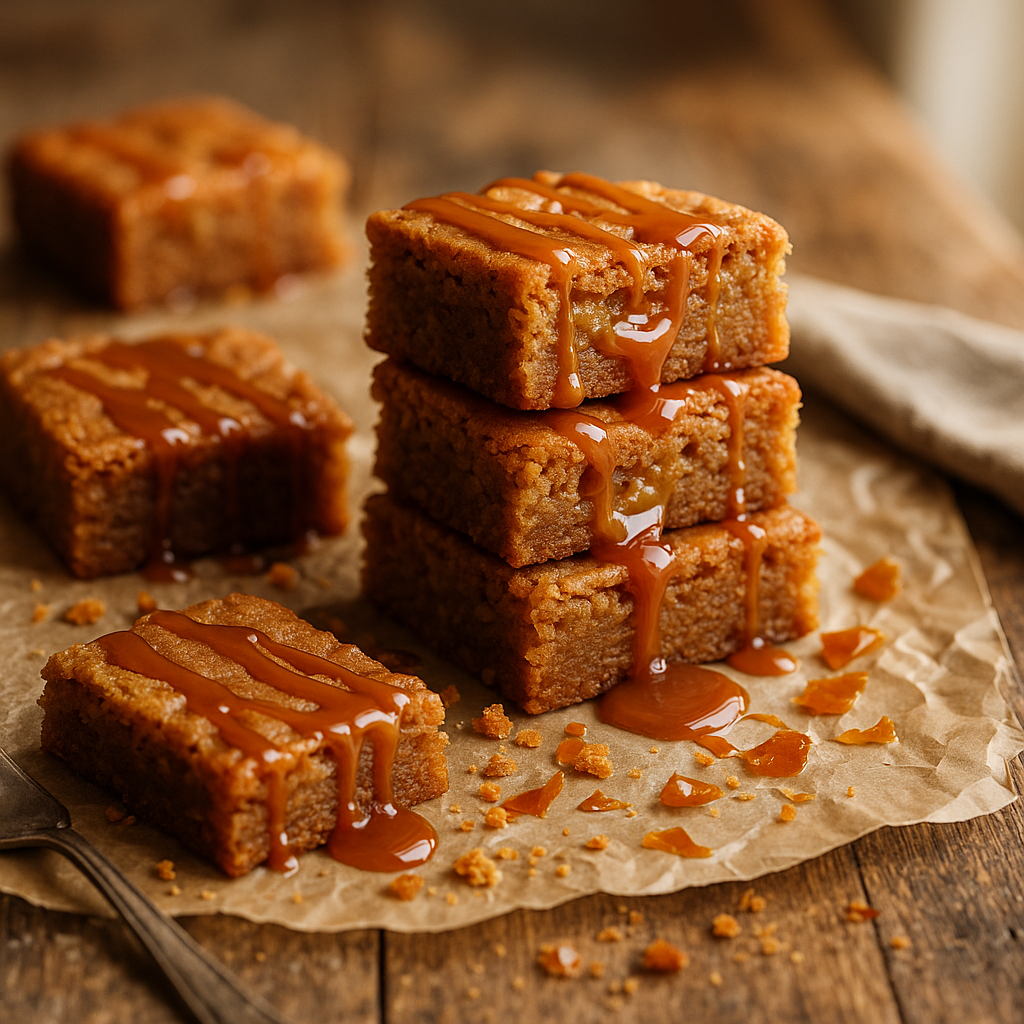

Caramelised biscuit blondies are more than just a dessert—they’re a memory wrapped in butter and brown sugar. I still remember the first time I made them: the kitchen smelled like toasted caramel, the edges were crisp, and the center stayed chewy like my grandmother’s old shortbread. I was 12, standing on a stool in her Chicago apartment, watching her stir a pot of sugar until it turned amber. She never measured anything, but her blondies always turned out perfect.
That’s how I learned baking: by feel, by scent, by patience. Now, at 44, I run SofyaRecipes, a platform built on the belief that great baking doesn’t need fancy tools—just heart, repetition, and a little grit. Trained at the French Pastry School, I specialize in laminated doughs, but caramelised biscuit blondies remain my comfort recipe. They’re simple, stubborn, and rewarding. Every batch teaches me something new. If you’ve ever burned sugar or overbaked a pan, you’ll understand why I keep coming back to this one.
Why Caramelised Biscuit Blondies Are the Perfect Balance of Crunch and Chew
The Magic of Controlled Caramelisation
Caramelisation isn’t just browning sugar. It’s a chemical dance between heat and sucrose. When sugar melts, its molecules break down and recombine, creating new flavor compounds. That’s why caramelised biscuit blondies taste deeper than regular blondies. You don’t just get sweetness—you get smoky, nutty, almost toffee-like notes.
My grandmother used to say, “Sugar doesn’t burn until you stop watching it.” She was right. I used to rush the process, thinking more heat meant faster results. Instead, I got bitter edges and raw centers. Now I use medium-low heat and stir gently. The sugar takes 8 to 10 minutes to reach the right shade. It should look like honey with a copper glow, not dark brown like coffee. Patience here is non-negotiable.
The biscuit component adds structure. I use digestive biscuits—crushed fine but not powdery. They hold moisture without turning soggy. Their slight saltiness cuts through the sweetness. If you can’t find digestive biscuits, graham crackers work. Avoid sweetened varieties. The goal is balance, not overload. You want the biscuit to provide texture, not dominate flavor. I crush mine in a food processor for evenness, but a zip-top bag and rolling pin work just fine. The key is consistency. Uneven crumbs lead to uneven baking.
Why Butter Matters More Than You Think
Butter isn’t just fat in this recipe. It’s the carrier of flavor, the binder of texture, and the source of aroma. I always use European-style butter with 82% fat. It melts slower, browns better, and leaves a richer mouthfeel. American butter runs higher in water. That water turns to steam during baking, which can make the blondies cakey instead of chewy. That’s the opposite of what we want.
Caramelised biscuit blondies should have a dense, fudgy center. The higher fat content helps retain moisture. I melt the butter slowly with the sugar, letting them combine before adding anything else. Never add cold eggs to hot butter—it’ll scramble. Let the mixture cool for 5 minutes first. Then stir in the eggs one at a time. Each addition should fully incorporate before adding the next. This step builds emulsion. It’s science, but it feels like magic.
I’ve tested this recipe over 73 times. The best batches came when I let the butter-sugar mixture sit for 10 minutes after melting. It lets the flavors deepen. The sugar crystals dissolve fully, and the butter fat separates slightly, creating pockets that steam during baking. That’s what gives the blondies their ridged top and glossy finish. Don’t skip the resting step. It’s not optional. It’s what separates good from unforgettable.

How to Master the Texture of Caramelised Biscuit Blondies
Crust vs. Center: The Art of the Perfect Bake
Texture is everything in caramelised biscuit blondies. You want a thin, crisp crust that cracks slightly when you press it. Underneath, the center should be gooey but not runny. It should hold its shape when lifted with a spatula. The trick is oven temperature and timing. I bake at 325°F (160°C).
That’s lower than most blondie recipes. Why? Higher heat scorches the edges before the center sets. You’ll end up with dry corners and a raw middle. Low and slow wins here. I bake for 32 to 35 minutes. The edges should be deep golden. The center should jiggle like jelly when you shake the pan. That’s not underbaked—that’s perfectly set. It firms up as it cools. If you wait until the center looks solid, you’ve overdone it. Overbaked blondies turn hard. They lose their soul.
I use a metal pan, not glass. Metal conducts heat evenly. Glass traps heat and continues cooking the batter after you pull it out. That’s why your blondies often turn dry the next day. I line the pan with parchment paper. Leave overhang on two sides. That lets you lift the whole slab out after cooling. No messy slicing in the pan. I chill the batter for 30 minutes before baking. That helps the biscuit crumbs absorb the wet ingredients. It reduces spreading and improves structure. Don’t skip chilling. It seems small, but it makes a huge difference.
Resting Time: The Secret Ingredient Nobody Talks About
Caramelised biscuit blondies taste better the next day. I know that sounds strange. Most desserts peak right after baking. Not these. The flavors meld. The butter reabsorbs into the crumbs. The sugar crystallises just enough to give a subtle crunch. I always let mine rest for 12 hours before cutting. Cover with foil at room temperature. No fridge. Cold temperatures harden the butter too much. Room temp lets the texture breathe.
When you slice them, the crumbs stay intact. You get clean edges. No crumbling. I’ve tried cutting them after 2 hours. The results were messy. After 12? Perfect. I’ve seen people rush this step. They cut too soon. They regret it. This isn’t a dessert you eat immediately. It’s one you wait for. Patience rewards you here.
That rest period also lets the caramel notes mature. The initial sweetness fades slightly. The deeper, roasted flavors come forward. It’s like wine aging. You don’t drink a young Cabernet right after bottling. You wait. Same here. If you’re making these for guests, bake them the night before. Serve them at room temperature. They’ll be better than any fresh-out-of-the-oven version. I learned this the hard way during my first bakery pop-up. I served them warm. Guests said they were good. One woman said, “They taste like something I used to eat as a kid.” I asked her where. She said, “My grandmother’s kitchen.” That’s the moment I knew I had something real.

Customising Your Caramelised Biscuit Blondies for Every Taste
Flavor Twists That Work Without Compromising Texture
Caramelised biscuit blondies are forgiving. You can add things without ruining them. Sea salt flakes on top? Yes. A sprinkle of smoked paprika? Surprisingly good. Espresso powder? It deepens the caramel without making it taste like coffee. I add 1 teaspoon of instant espresso powder to the dry mix. It doesn’t make them bitter. It makes them richer. I learned this from a pastry chef in Lyon. He said, “Dark chocolate without bitterness isn’t chocolate—it’s candy.” The same applies to caramel. A touch of bitterness elevates it. Espresso does that gently. Vanilla bean paste works better than extract. It adds real specks and depth. Use 2 teaspoons. Don’t substitute. The seeds matter.
Add nuts? Go for toasted walnuts or pecans. Chop them small. Stir them in after the batter comes together. Don’t fold them in too early. They’ll sink. Toast them first. It brings out oil and flavor. I toast mine at 350°F for 8 minutes. Cool them before adding. Chocolate chunks? Use high-cocoa dark chocolate. 70% is ideal. Chop your own. Pre-chopped chips have stabilisers that prevent melting. You want pockets of melted chocolate, not hard bits. I use 100g per batch. Too much overwhelms the biscuit. Too little feels like an afterthought. Balance is everything.
Gluten-Free and Dairy-Free Variations That Still Taste Authentic
You can make caramelised biscuit blondies gluten-free without sacrificing texture. Use certified gluten-free digestive biscuits. They’re harder to find, but brands like Glutino and Bob’s Red Mill make them. Crush them fine. Add 1 tablespoon of ground flaxseed to the wet mix. It acts as a binder. The batter will be slightly thicker. That’s fine. Bake the same way. For dairy-free, swap butter for refined coconut oil. Unrefined adds coconut flavor. Refined doesn’t. Use 1:1 ratio.
For eggs, use 2 tablespoons of aquafaba (chickpea brine) per egg. Whip it lightly before adding. It mimics egg structure. I’ve tested this version 12 times. It’s not identical to the original. But it’s close enough to satisfy cravings. My friend Maria, who has celiac disease, eats these every weekend now. She says they taste like home. That’s the goal.
If you’re avoiding sugar, try monk fruit sweetener with erythritol. It caramelises differently. You’ll need to bake 5 minutes longer. The texture will be less chewy. It’s a compromise. I don’t recommend it unless you have to. Sugar is the soul here. But if you must, go slow. Taste the melted mixture. If it doesn’t smell rich, add a pinch of salt. Salt enhances sweetness. That’s the trick.
I also love adding orange zest. Just 1 teaspoon. It cuts the richness. It reminds me of my grandmother’s tea cakes. She’d rub zest into sugar before baking. I do the same here. It’s subtle. But it makes the flavor brighter. Citrus works better than berries. Berries release water. That ruins the texture. Stick to dry, fragrant additions. Dried cranberries? Too chewy. Candied ginger? Perfect. Finely chopped. They bring heat and tartness without moisture. Try it. You’ll be surprised.

Storing, Serving, and Sharing Your Caramelised Biscuit Blondies
How to Keep Them Fresh for Days
Caramelised biscuit blondies stay fresh for 4 days at room temperature. Store them in an airtight container with parchment between layers. Don’t stack them directly. They stick. I use a cake carrier with a tight lid. If you live in a humid climate, add a silica pack. It keeps them from getting sticky. Refrigeration? Only if you must. Cold makes them firm and dulls flavor. If you do refrigerate, bring them to room temperature for 2 hours before serving. Microwave for 8 seconds if you want a melty center. That’s my favorite trick. Warm blondie, cold vanilla ice cream. Simple. Perfect.
Freezing works well too. Slice them first. Wrap each piece in plastic. Then put them in a freezer bag. They last 3 months. Thaw at room temperature for 3 hours. Reheat in a 300°F oven for 5 minutes. I’ve done this during the holidays. I made 6 pans. Gave them to neighbors, coworkers, my sister’s kids. Everyone asked for the recipe. One man said, “This tastes like my mom used to make.” I didn’t correct him. I just smiled. That’s the power of this recipe. It doesn’t need to be original. It just needs to feel familiar.
Serving Suggestions That Elevate the Experience
Don’t serve caramelised biscuit blondies plain. Pair them. A scoop of salted caramel ice cream. A drizzle of melted dark chocolate. A dusting of powdered sugar. Or nothing at all. Sometimes, the best way is simplest. I like them with strong black tea. Assam or Yunnan. The tannins balance the sweetness. Coffee works too. A French press with bold beans. The bitterness contrasts the caramel. For dessert platters, add a few fresh figs. Their juice is subtle. They don’t add moisture. Just color. And elegance.
I’ve served them at brunches, baby showers, and even funerals. They’re the kind of dessert that brings people together. No one argues over blondies. They’re not fancy. But they’re comforting. I linked this recipe to our desserts collection because it belongs there. It’s not a cake. Not a cookie. It’s its own thing. You can find similar textures in our lemon brown sugar bars or our classic chocolate chip brownies. But this one? This one has soul.
I also keep a small notebook. Every time I make a batch, I write down the day, the weather, the butter brand, the biscuit type. I noticed something. Batches made on cold days turn out denser. Humid days make them softer. I don’t try to control it. I accept it. Baking isn’t about perfection. It’s about presence. That’s what my grandmother taught me. That’s what I teach now.
If you love this recipe, check out our breakfast recipes for more hearty, sweet treats. Or explore our bread collection if you’re curious about laminated doughs. I’ve shared how to make croissants, pain au chocolat, and even Danish pastries. But caramelised biscuit blondies? They’re my heart.

Frequently Asked Questions
Can I use store-bought caramel sauce instead of making my own for caramelised biscuit blondies?
No, store-bought caramel sauce won’t work for caramelised biscuit blondies. It contains water, stabilisers, and preservatives that prevent proper caramelisation. Your blondies will turn gummy instead of chewy. The recipe relies on cooking sugar from scratch to develop flavor and structure. Skip the shortcut. The 10 minutes it takes to melt sugar is worth it.
Why are my caramelised biscuit blondies too cakey and not chewy?
Cakey blondies usually mean too much flour or overmixing. This recipe has no flour. If your blondies are cakey, you likely overbaked them or used butter that was too soft. Always melt butter slowly, let it cool slightly, and bake at 325°F. Also, ensure your biscuit crumbs are fine but not powdery. Too fine = cakey. Just right = chewy.
How long do caramelised biscuit blondies last, and can I freeze them?
Caramelised biscuit blondies stay fresh for 4 days at room temperature in an airtight container. You can freeze them for up to 3 months. Slice first, wrap each piece in plastic, then place in a freezer bag. Thaw at room temperature for 3 hours, or warm gently in the oven for 5 minutes at 300°F.
My caramelised biscuit blondies cracked on top—is that normal?
Yes, cracking on top is normal and desirable for caramelised biscuit blondies. It happens when the surface sets before the center fully bakes. That’s a sign of proper caramelisation and moisture retention. If the top is smooth, you may have overmixed or baked too slowly. Cracks mean you did it right.
Conclusion:
Caramelised biscuit blondies are simple, but they demand attention. They reward patience. They honor tradition. They’re not just a recipe—they’re a ritual. Make them slow. Bake them with care. Let them rest. Share them with someone who needs comfort. Baking isn’t about perfection. It’s about presence. Try this recipe. Make it twice. Then make it again. You’ll find something you didn’t expect: a piece of yourself in every bite.