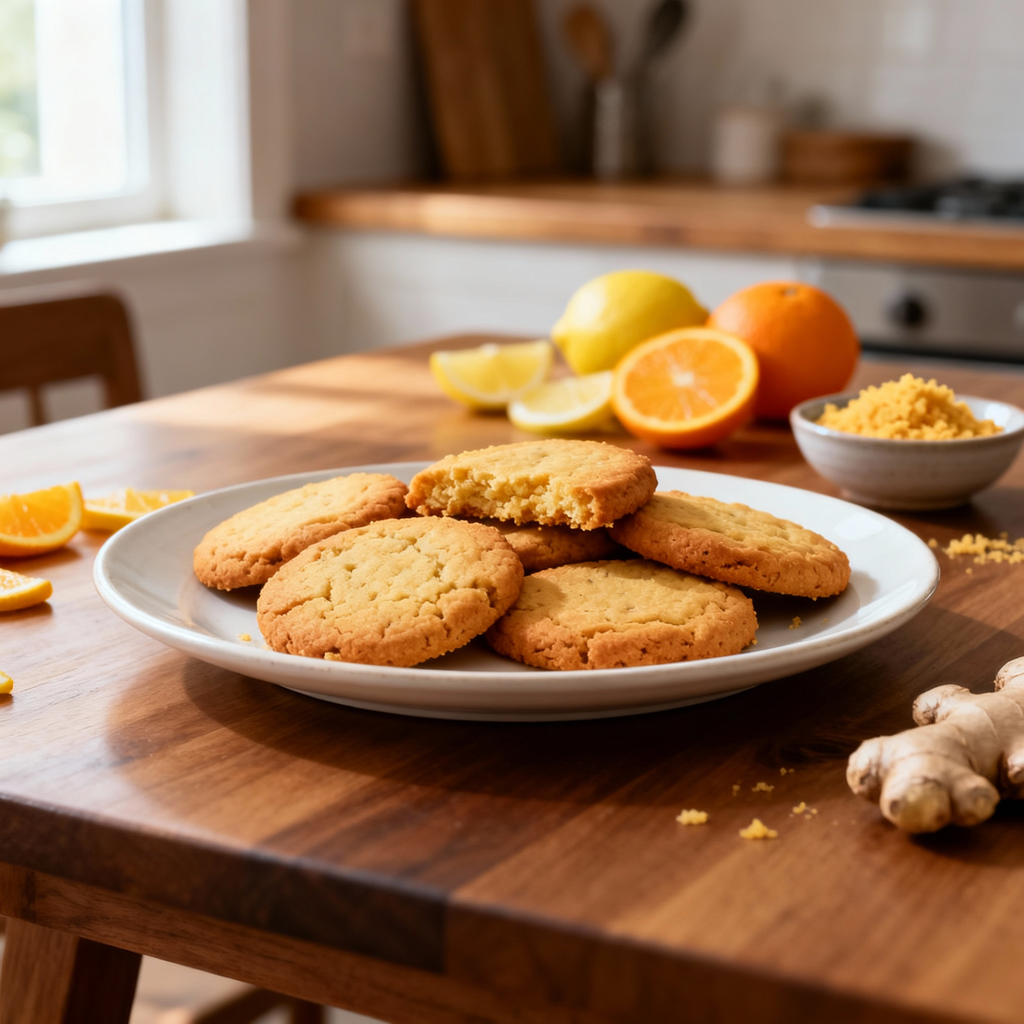

3 Ingredients Ginger Citrus Shortbread is kind of the perfect reminder that you don’t need a long, fancy ingredient list to make something memorable. This cookie is quick, dependable, and packed with flavor. Fresh ginger brings a gentle warmth, citrus zest adds a bright pop, and the buttery base ties it all together.
It works just as well on a snowy afternoon as it does when you need a last minute treat, you know the kind. Rich, buttery, a little zesty, and done before you’ve fully decided what playlist to put on.
Classic shortbread is all about that tender, crumbly texture, and this version stays true to that. The ginger adds depth without being spicy, and the orange or lemon zest keeps everything feeling light. The result is crisp, melt in your mouth cookies that feel fancy but are honestly very low effort. It’s one of those recipes that makes people think you tried harder than you did, lol.
In this guide, we’ll walk through exactly how to make 3 Ingredient Ginger Citrus Shortbread, why the 3 2 1 ratio really matters, and how to dodge the most common shortbread mistakes. We’ll also answer questions like can you put ginger in shortbread and what actually makes shortbread turn out great every single time.
If you’re ready to bake something bright, buttery, and genuinely satisfying, this shortbread deserves a permanent spot in your kitchen. Trust me, you’ll come back to it.
Grandmother’s Secret Recipe Box
The first time I baked these cookies, I was standing on a step stool in my grandmother’s kitchen, barely tall enough to see over the countertop. She had pulled out a weathered recipe card, its edges soft from years of handling. “This one is special,” she told me, her eyes crinkling at the corners. “It’s what I bake when I need a little sunshine.”
Growing up in a small apartment in Belarus, our kitchen was modest, but it was where magic happened. My grandmother would transform the simplest ingredients into creations that made our home feel warm and inviting, no matter what was happening outside our walls. These shortbread cookies became my emotional anchor – something I would bake whenever I felt homesick after moving to America or when I needed to channel my grandmother’s strength.
The recipe has evolved over the years. Where my grandmother used only ginger powder, I’ve experimented with fresh ginger. Where she used only lemon, I sometimes blend different citrus notes. But the heart of the recipe – that perfect balance between warming spice and bright citrus – remains unchanged, a testament to her culinary wisdom.
From Old World to New: Shortbread’s Journey
Shortbread itself has a fascinating history that stretches back to medieval Scotland, where it evolved from medieval biscuit bread. The term “short” refers to the crumbly texture created by a high butter content that inhibits gluten development. Traditional Scottish shortbread was considered a luxury item, saved for special occasions like Christmas and Hogmanay (Scottish New Year).
In my family’s Eastern European tradition, we incorporated warming spices like ginger, which was valued not only for its flavor but also for its digestive properties. The addition of citrus came later – perhaps an adaptation after my great-grandmother moved closer to the Black Sea, where citrus fruits were more readily available. The combination created something that bridged cultural traditions: the buttery richness of Scottish shortbread with the bright, spiced notes common in Eastern European baking.
What I love about spiced butter cookies is how they connect me to multiple culinary traditions while creating something that feels uniquely mine. They’re perfect for holiday gift baskets but special enough to enjoy year-round.
The Magic Behind the Flavor
Quality Ingredients Make the Difference
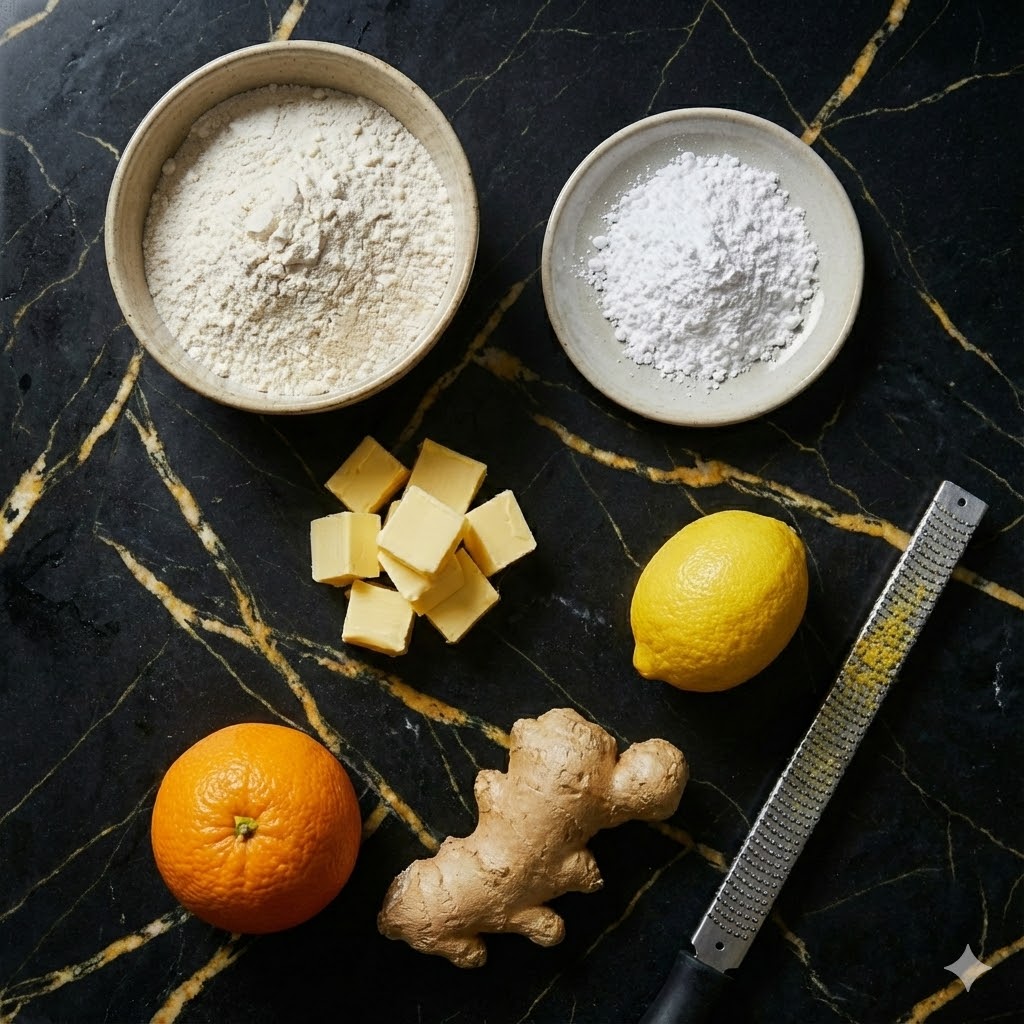
The beauty of shortbread lies in its simplicity, which means each ingredient must shine. For the butter, I recommend using European-style butter with a higher fat content (at least 82%). The extra fat creates a more tender crumb and richer flavor that forms the foundation of exceptional shortbread.
For the ginger component, I use a combination of ground ginger and crystallized ginger. The ground ginger provides a consistent warmth throughout the dough, while small pieces of crystallized ginger create unexpected bursts of spicy sweetness. When selecting ground ginger, look for one that’s fragrant and hasn’t been sitting in your spice cabinet for years – ginger loses its potency over time.
The citrus element comes from both zest and a small amount of juice. I prefer unwaxed, organic citrus fruits since we’re using the outer peel. Meyer lemons offer a wonderful sweetness if you can find them, but standard lemons work beautifully too. For variations, try orange or lime, or even a combination of citrus fruits.
The type of sugar matters as well. I use a combination of granulated sugar in the dough and a light dusting of superfine sugar on top before baking. The superfine sugar creates a subtle, sweet crust that contrasts nicely with the tender interior.
Finally, don’t overlook the importance of good vanilla extract. While not the star flavor, vanilla rounds out the profile and bridges the spicy and citrus notes. If your budget allows, use real vanilla extract rather than artificial flavoring – the difference is noticeable.
The Baker’s Arsenal: Tools for Perfect Shortbread
While shortbread doesn’t require specialized equipment, a few key tools will help you achieve consistent results. A kitchen scale is invaluable for measuring ingredients precisely, especially flour and butter. Shortbread has a delicate balance of ingredients, and even small variations can affect the final texture.
For mixing, I prefer to use my hands rather than a mixer. This gives me better control and prevents overworking the dough, which can develop gluten and make the shortbread tough. However, if you’re making a double batch or if your hands run warm, a stand mixer on low speed works well.
For rolling out the dough evenly, I use wooden dowels as thickness guides (¼ inch is ideal for these cookies), but you can also use specialized rolling pin rings or even wooden craft sticks as impromptu guides.
A microplane grater is perfect for obtaining fine zest without the bitter pith, creating tiny fragrant flecks that distribute beautifully throughout the dough. For cutting the cookies, traditional shortbread molds create beautiful patterns, but simple cookie cutters or even a sharp knife for cutting into wedges work perfectly well.
Perhaps the most important tool is a good baking sheet. I prefer heavy-duty aluminum sheets that won’t warp in the oven. Line them with parchment paper or silicone baking mats to prevent sticking and ensure even baking. If you have access to baking stones, they help maintain consistent temperature and produce shortbread with perfectly crisp bottoms, similar to those found in rustic tarts and traditional flatbreads.
Creating Your Ginger-Citrus Shortbread
The Perfect Dough: Step by Step
First, gather all your ingredients and allow them to come to room temperature. Cold butter will not incorporate properly, while butter that’s too warm will make your dough greasy. You’re looking for butter that yields to gentle pressure but still holds its shape.
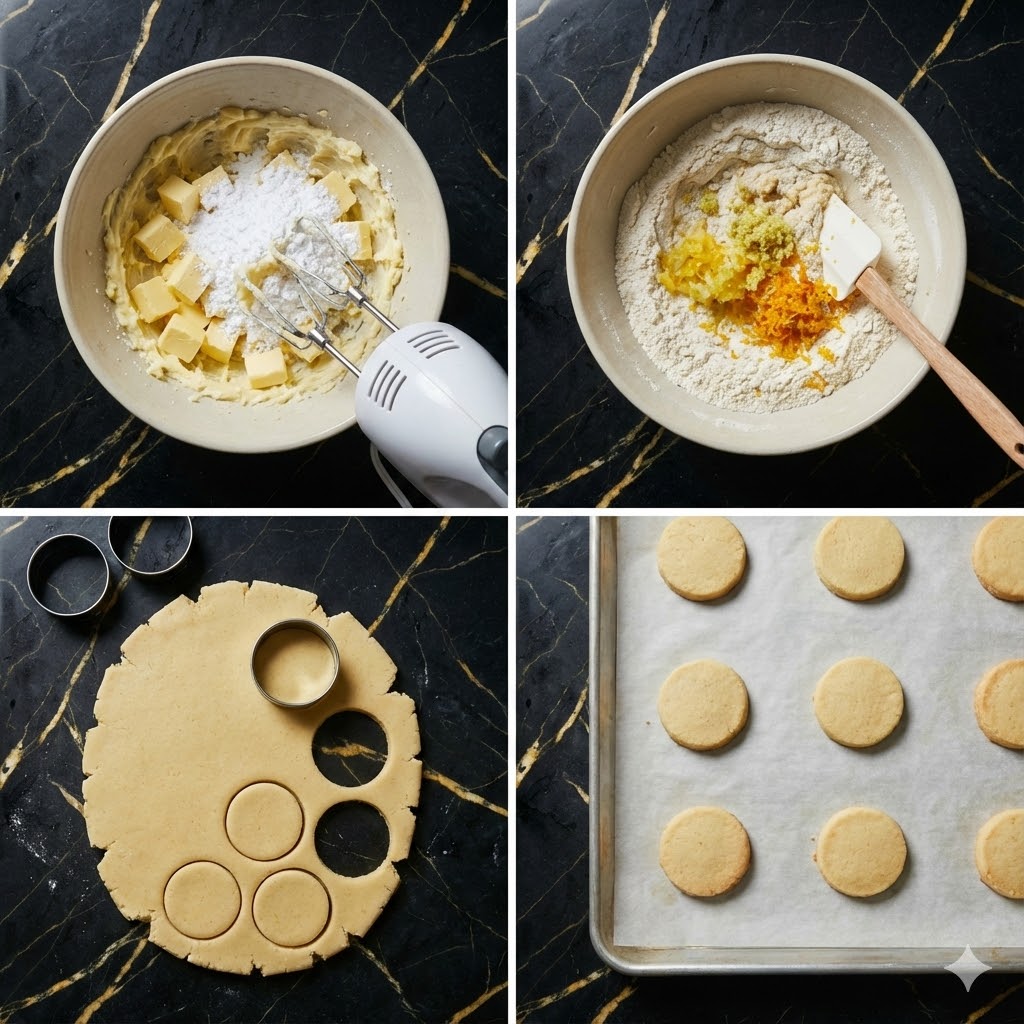
Begin by whisking together 2 cups of all-purpose flour, ¼ teaspoon of salt, and 2 teaspoons of ground ginger in a medium bowl. This helps distribute the spice evenly throughout the flour. Then, in a separate large bowl, cream together 1 cup (2 sticks) of unsalted butter and ⅔ cup of granulated sugar until just combined and slightly fluffy. Don’t overbeat – we’re not trying to incorporate air as we would for a cake.
Next, add 1 tablespoon of finely minced crystallized ginger, 1 tablespoon of lemon zest, and 1 teaspoon of vanilla extract. Mix until these flavorings are evenly distributed throughout the butter mixture. The aroma at this stage is absolutely intoxicating – warm, bright, and buttery all at once.
Gradually add the flour mixture to the butter mixture, stirring gently until just combined. The dough will seem crumbly at first, but resist the temptation to add liquid or overwork it. Instead, use your hands to gently press it together. The warmth of your hands will help the butter soften just enough to bring the dough together.
Once the dough forms a cohesive mass, divide it in half and shape each portion into a disk. Wrap in plastic and refrigerate for at least 30 minutes. This chilling step is crucial – it allows the butter to firm up again and gives the flour time to fully hydrate, resulting in a better texture.
When you’re ready to bake, preheat your oven to 325°F (165°C). Roll out the chilled dough on a lightly floured surface to about ¼ inch thickness. Cut into your desired shapes and transfer to prepared baking sheets, leaving about 1 inch between cookies. Prick each cookie several times with a fork – this traditional step prevents air bubbles and helps the shortbread bake evenly.
Finally, sprinkle the cookies lightly with superfine sugar and bake for 15-20 minutes, or until the edges are just beginning to turn golden. The centers will still look slightly soft but will firm up as they cool.
Troubleshooting and Perfecting Your Technique
One common issue with shortbread is spreading during baking. If your cookies lose their shape, the butter was likely too warm. Always chill the cut cookies for 15 minutes before baking if your kitchen is warm or if the dough has softened during handling.
If your shortbread turns out too crumbly, you may have used too much flour or not worked the dough enough to develop sufficient structure. Remember that shortbread should have some crumble, but it shouldn’t fall apart completely when bitten.
On the other hand, tough shortbread usually results from overworking the dough, which develops gluten. Handle the dough minimally and stop mixing as soon as it comes together.
For even baking, rotate your baking sheets halfway through the baking time. If the edges are browning too quickly, your oven may run hot. Try reducing the temperature slightly or positioning the rack in the center rather than the lower third of the oven.
Enjoying Your Creation
Presentation and Pairings
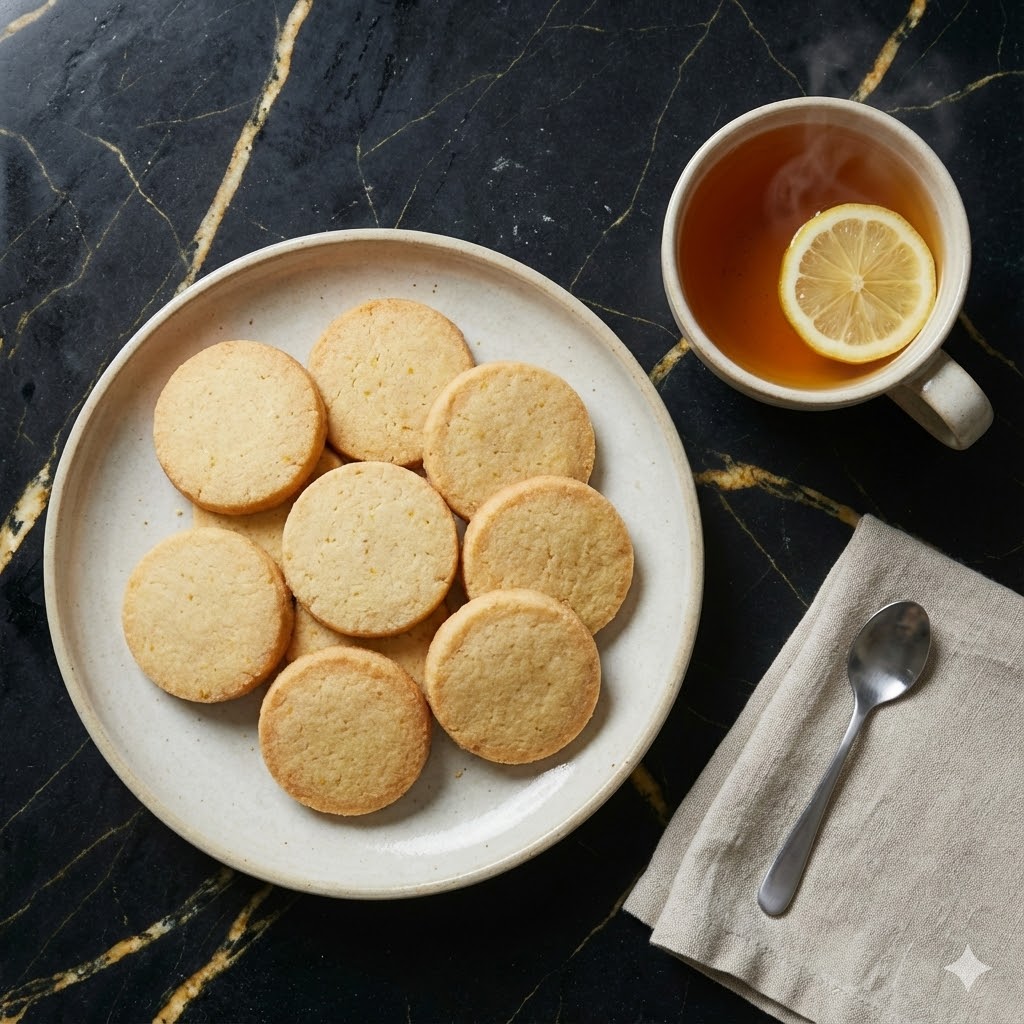
These shortbread cookies shine in their elegant simplicity. For casual serving, arrange them on a wooden board or simple white platter where their golden hue can be appreciated. For more formal occasions, try stacking them in alternating directions for height, or arrange them in a circular pattern on a cake stand.
The spicy-citrus profile pairs beautifully with tea, especially Earl Grey or a gentle chamomile. The bergamot in Earl Grey complements the citrus notes, while chamomile brings out the warming qualities of the ginger. For coffee drinkers, these shortbread cookies balance nicely with a medium roast that has caramel undertones.
During the holidays, I love to serve these alongside mugs of mulled cider or wine, where the spices in the drink echo the ginger in the cookies. They also make wonderful gifts, packaged in vintage tins lined with parchment paper or stacked in clear cellophane bags tied with ribbon.
Storage and Adaptations
Properly stored, these shortbread cookies will maintain their quality for up to two weeks. Keep them in an airtight container at room temperature, with parchment paper between layers to prevent sticking. For longer storage, the baked cookies freeze beautifully for up to three months. The dough can also be frozen for up to a month – simply form it into a log, wrap tightly, and slice before baking (no need to thaw completely).
For those with dietary restrictions, this recipe adapts well to various needs. For a gluten-free version, substitute a high-quality cup-for-cup gluten-free flour blend. The high butter content means the texture remains surprisingly authentic.
For dairy-free alternatives, plant-based butter substitutes designed for baking work well, though the flavor will vary slightly. I find that coconut oil-based substitutes complement the ginger nicely, while almond-based varieties work well with the citrus notes.
You can easily customize the flavor profile by adjusting the spice and citrus components. Try adding a pinch of cardamom or cinnamon along with the ginger, or incorporate orange or lime zest instead of lemon. For a more complex flavor, add a tablespoon of finely chopped fresh thyme or rosemary to the dough.
Frequently Asked Questions
Can I make the dough ahead of time?
Absolutely! The dough can be refrigerated for up to three days or frozen for up to a month. If refrigerating for more than a few hours, let the dough sit at room temperature for 15-20 minutes before rolling to prevent cracking.
Why did my shortbread turn out too hard?
Overly firm shortbread usually results from either too much flour or overbaking. Make sure to measure your flour correctly by spooning it into the measuring cup and leveling off, rather than scooping directly with the measuring cup. Also, remember that shortbread continues to firm up as it cools, so remove it from the oven when it still looks slightly underdone in the center.
Can I use bottled lemon juice instead of fresh?
While bottled lemon juice works in a pinch for the small amount of juice in this recipe, you’ll need fresh lemons for the zest, which carries most of the citrus flavor. The oils in the zest contain the bright, aromatic compounds that make these cookies special.
How can I get a more pronounced ginger flavor?
For more ginger intensity, increase the ground ginger to 1 tablespoon and the crystallized ginger to 2 tablespoons. You can also add 1 teaspoon of freshly grated ginger root, but be aware that this adds moisture to the dough, so you might need to adjust with a small amount of additional flour.
Conclusion :
Okay, let’s be real for a second. This is one of those recipes you make once and then keep coming back to without even thinking about it. 3 Ingredient Ginger Citrus Shortbread just works. It’s easy, it’s cozy, and it somehow feels a little fancy without asking much from you at all. It starts with classic shortbread, nothing complicated there. Then you add fresh ginger for warmth and citrus zest for that bright, almost happy pop of flavor. That’s it. Three ingredients. No mixer drama. No special pans. No second guessing yourself halfway through.
The cookies come out buttery and crisp, with that melt in your mouth thing shortbread does so well. Not too sweet. Not heavy. Just balanced. The kind of cookie you grab “just one more” of, even when you weren’t planning on it. You know how it goes. This recipe is also kind of a lifesaver. Weekday baking, holiday cookie tins, last minute gifts that don’t feel last minute, it covers all of it. It’s reliable, which honestly matters more than people admit. You can trust it, and that feels good.
Once you taste how the ginger warms everything up and the citrus keeps it fresh, you’ll see why this combo sticks. You might play around with it. Or you might decide this is the version and call it a day. Either way, you win. So yeah, grab your butter and flour, add that zingy ginger citrus moment, and bake a batch. Your kitchen will smell amazing, like actually amazing. And don’t plan on leftovers. They disappear fast.
Print
How to Make 3-Ingredient Ginger Citrus Shortbread
- Total Time: 30 minutes
- Yield: 18 cookies 1x
- Diet: Vegetarian
Description
This buttery, crumbly shortbread is made with just three base ingredients plus a bold infusion of ginger and citrus zest. Quick to prepare, deliciously zesty, and perfect with tea.
Ingredients
1 cup (2 sticks) unsalted butter, cold and cubed
1/2 cup powdered sugar
2 cups all-purpose flour
1 tbsp freshly grated ginger
1 tbsp citrus zest (orange, lemon, or a mix)
Instructions
1. In a mixing bowl, beat cold butter and powdered sugar until creamy.
2. Add citrus zest and grated ginger. Mix just to combine.
3. Add flour gradually and mix until dough forms. Do not overmix.
4. Press dough into a flat disk, wrap, and chill for 30 minutes.
5. Preheat oven to 325°F (163°C). Line a baking sheet with parchment paper.
6. Roll out dough to 1/4-inch thickness and cut into desired shapes.
7. Place cookies on baking sheet and chill for 10 more minutes.
8. Bake for 14–16 minutes or until edges are lightly golden.
9. Cool completely on wire rack before serving.
Notes
Use fresh ginger and citrus zest for the best flavor.
For finer texture, use powdered sugar instead of granulated.
Do not overbake—cookies should remain pale with just golden edges.
- Prep Time: 15 minutes
- Cook Time: 15 minutes
- Category: Cookies
- Method: Baking
- Cuisine: American
Nutrition
- Serving Size: 1 cookie
- Calories: 120
- Sugar: 4g
- Sodium: 10mg
- Fat: 8g
- Saturated Fat: 5g
- Unsaturated Fat: 2g
- Trans Fat: 0g
- Carbohydrates: 12g
- Fiber: 0.5g
- Protein: 1g
- Cholesterol: 20mg