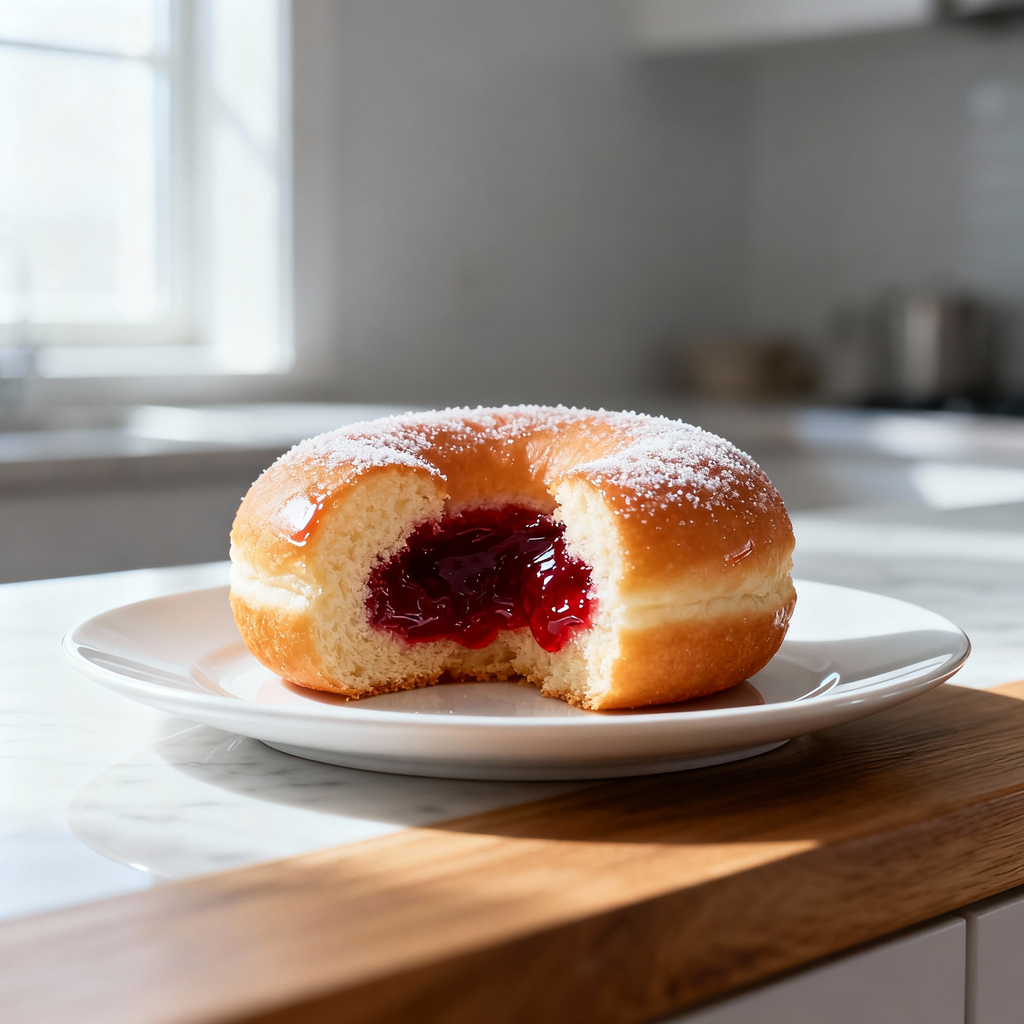

Ever bitten into a jelly filled doughnut and thought, honestly, why isn’t this an entire cake? Same. That’s exactly where this jelly doughnut cake recipe comes in. It takes everything we love about a classic jelly doughnut, the fluffy crumb, the sweet jammy center, that cozy bakery vibe, and turns it into a soft, buttery cake you can actually slice and share.
This cake fits just about anywhere. Brunch with friends, holiday mornings, or one of those random weekdays when you want something comforting but not complicated. It feels familiar, but also kinda special, you know.
I grew up in Chicago, spending weekends in my Russian grandmother’s kitchen. Jam filled pastries were always around, usually sitting on the counter like they belonged there. She baked by feel, not measurements, and she truly believed good food brought people together. Those moments stuck with me. Later, after training at the French Pastry School, I wanted to blend that old world comfort with a simpler, more modern approach.
Instead of frying dough, this recipe uses a rich cake batter with a generous layer of jelly baked right into the center. No oil splatters, no stress. You still get that doughnut magic, just in cake form. Raspberry jam is classic, strawberry works great, and lemon curd is honestly amazing if you want something brighter. Every slice has a little surprise in the middle.
In this article, I’ll walk you through everything, ingredients, baking tips, and easy variations. By the end, you’ll have a jelly doughnut cake that feels nostalgic, comforting, and just a little indulgent. Fair warning, once you try it, breakfast might never be the same.
A Sweet Reminder of Home
My grandmother’s kitchen was always my sanctuary. On Sunday mornings, the house would fill with the unmistakable aroma of fried dough and sugar, signaling that her famous doughnuts were in the making. I’d watch, mesmerized, as she expertly filled each one with homemade raspberry jam, the bright red filling a stark contrast against the golden brown exterior. Those mornings represented everything I loved about food—family gathered around the table, hands sticky with sugar, and conversations flowing as freely as the coffee.
Years later, when planning my first dinner party in my tiny apartment, I wanted to recreate that feeling but needed something more sophisticated than individual doughnuts. The idea struck me like lightning—why not transform those beloved flavors into a showstopping cake? My first attempt was admittedly disastrous (imagine jam sinking straight to the bottom of the pan), but after several iterations, this recipe was born. Now, it’s the dessert most requested by friends and family, a testament to how comfort food can evolve while keeping its soul intact.
From Tradition to Innovation
This cake draws inspiration from European baking traditions, particularly the beloved sufganiyot served during Hanukkah and the German Berliner jelly doughnuts that grace bakery windows year-round. What makes these filled jelly doughnuts so special across cultures is their status as celebration food—they’re never just dessert, but rather markers of festivity and abundance.
The transformation from individual jelly doughnuts to cake form isn’t merely about convenience. It’s about creating something that honors tradition while making it accessible for modern home bakers. No deep-frying required, no specialized equipment needed—just the warm embrace of familiar flavors in a new presentation.
This recipe pairs beautifully with my Vanilla Cake for an extra special touch, or can be served alongside Fresh Berry Compote for an explosion of fruity goodness. The combination of warm cake, cool sauce, and fresh berries creates a dessert experience that transcends the sum of its parts.
The Heart of Flavor: Key Ingredients
The Building Blocks of Bliss
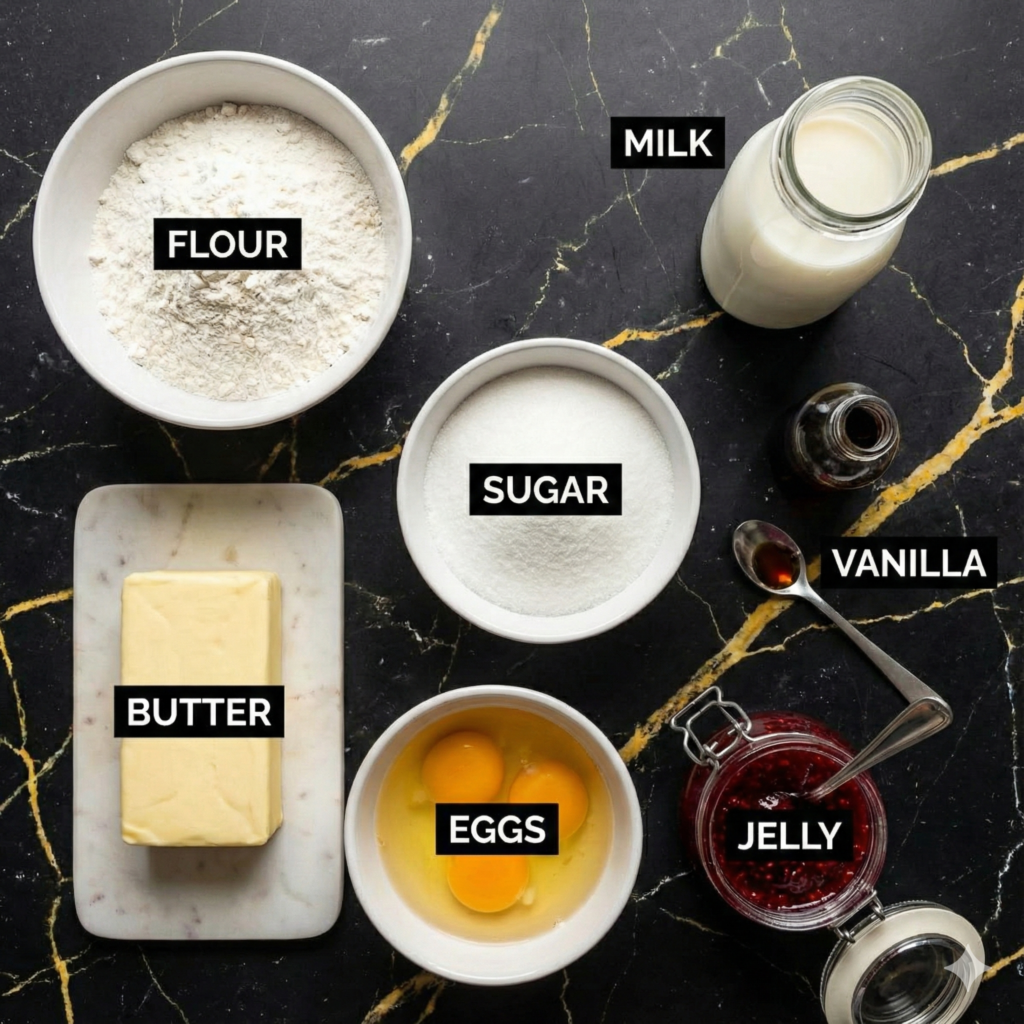
The soul of this cake lies in its carefully selected ingredients, each playing a crucial role in creating that authentic doughnut experience in cake form:
Cake Flour: Unlike all-purpose flour, cake flour’s lower protein content creates a more tender crumb that mimics the soft interior of a perfect jelly doughnut. If you can’t find cake flour, you can make your own by replacing two tablespoons of all-purpose flour with cornstarch for each cup needed.
Full-Fat Sour Cream: This secret ingredient brings moisture and a subtle tang that balances the sweetness perfectly. The fat content also contributes to the cake’s velvety texture—don’t be tempted to substitute with low-fat versions, as they simply don’t provide the same richness.
Pure Vanilla Extract: Use the best quality you can afford here. The warm, fragrant notes of real vanilla form the aromatic backbone of the cake, evoking memories of traditional bakery treats. In a pinch, vanilla bean paste makes an excellent substitute, adding those gorgeous speckles throughout the batter.
Quality Raspberry Jam: The filling is the star of the show, so choose a jam with high fruit content and minimal additives. I prefer seedless for a smooth texture, but seeded works beautifully if you enjoy that extra texture. For a more intensely flavored filling, try mixing in a tablespoon of raspberry liqueur or a squeeze of fresh lemon juice to brighten the jam.
Unsalted Butter: Always use room temperature butter for the perfect creaming texture. The butter’s flavor comes through in the finished cake, creating that rich, slightly buttery quality reminiscent of the best jelly doughnuts.
Tools and Techniques for Success
The beauty of this recipe lies in its accessibility—you don’t need professional equipment to achieve bakery-worthy results. That said, understanding a few key techniques will elevate your cake from good to unforgettable:
Stand Mixer vs. Hand Mixer: While a stand mixer makes the process easier, a hand mixer works perfectly well. The key is properly creaming the butter and sugar until truly light and fluffy—this creates air pockets that help the cake rise evenly and develop its tender texture. Don’t rush this step; proper creaming takes 3-5 minutes.
Bundt Pan: The traditional ring shape not only looks beautiful but serves a practical purpose, allowing the cake to bake evenly from the outside in. If you’re using a decorative Bundt pan with intricate designs, take extra care when greasing and flouring to prevent sticking. My grandmother taught me to use a pastry brush to apply melted shortening, followed by a dusting of flour, reaching into every nook and cranny.
Digital Kitchen Scale: If you want to take your baking to the next level, weighing ingredients ensures perfect consistency every time. Flour especially can vary dramatically when measured by volume, potentially resulting in a dry cake if packed too densely in measuring cups.
Bringing Your Jelly Doughnut Cake to Life
Creating jelly Doughnut Magic in Cake Form
First, preheat your oven to 350°F (175°C) and prepare your Bundt pan meticulously. The greasing process is critical—I brush every surface with softened butter, then dust with flour, tapping out the excess. This prevents any heartbreaking sticking when it’s time to unmold your masterpiece.
Begin by creaming room temperature butter and sugar together until the mixture becomes noticeably lighter in both color and texture—about 4-5 minutes. Many home bakers rush this step, but patience here builds the foundation for that perfect jelly doughnut-like crumb. Next, add eggs one at a time, allowing each to fully incorporate before adding the next. Then, mix in your vanilla extract, which infuses the batter with that characteristic warmth.
Meanwhile, whisk together your dry ingredients in a separate bowl. The combination of cake flour, baking powder, baking soda, salt, and a hint of nutmeg creates that classic raspberry-filled cake base with a subtle jelly doughnut flavor profile. The nutmeg is optional but highly recommended—it’s the secret aromatic element in many bakery jelly doughnuts that people can’t quite identify but definitely miss when it’s absent.
Alternately add your dry ingredients and sour cream to the butter mixture, beginning and ending with the flour. This method prevents overmixing while ensuring everything combines properly. The batter should look smooth and silky with a medium thickness—capable of holding its shape slightly when dropped from a spoon.
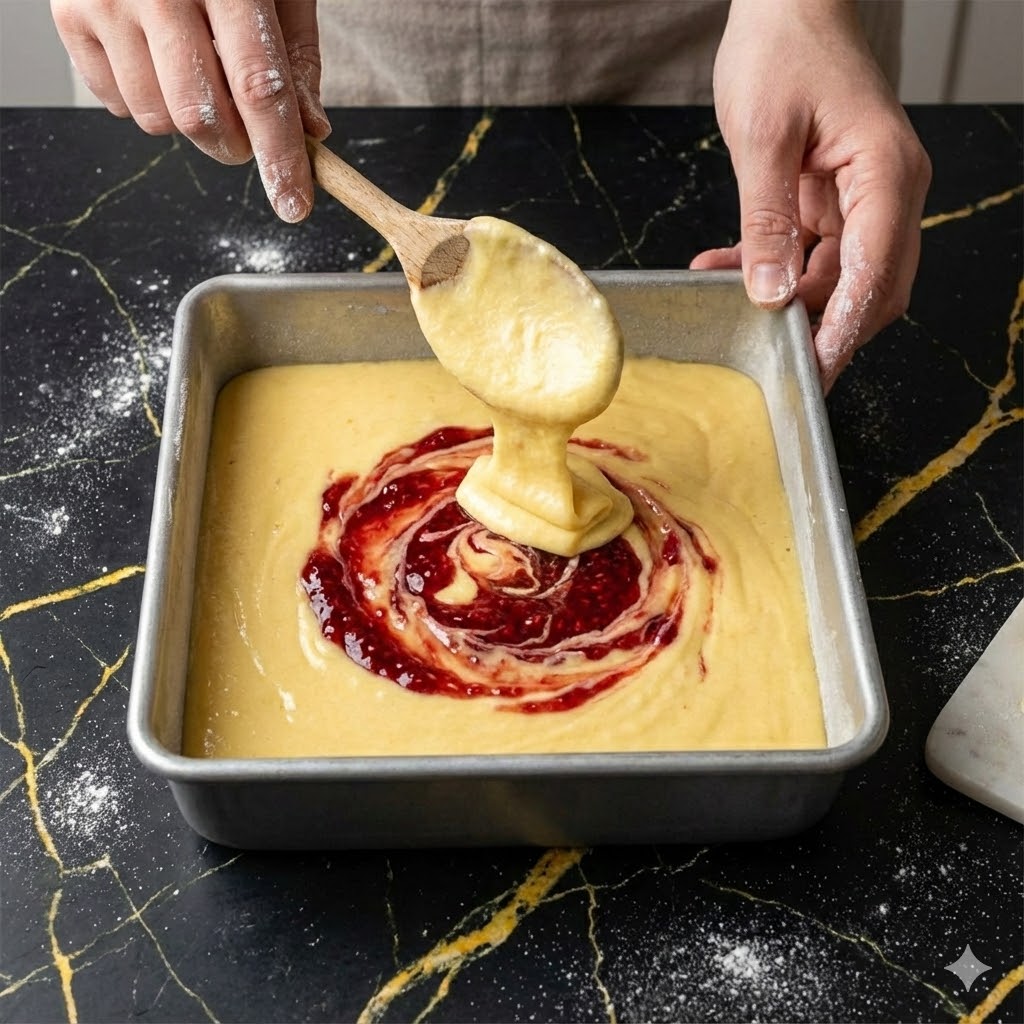
Now for the magic: pour half the batter into your prepared Bundt pan. Using a spoon, create a shallow channel in the center of the batter, then carefully spoon your raspberry jam into this trench, keeping it away from the edges of the pan. This technique prevents the jam from touching the sides of the pan directly, which can cause sticking. Gently cover with the remaining batter, being careful not to disturb the jam layer too much.
Bake until a toothpick inserted in the cakey part comes out clean, typically 45-50 minutes, though your oven may vary. The top should be golden brown and spring back slightly when touched.
Mastering Potential Challenges
The most common pitfall when making filled cakes is jam sinking to the bottom (which becomes the top when inverted). To prevent this, make sure your batter has the right consistency—too thin, and the filling will sink. The jam itself should be relatively thick; if yours is runny, simmer it for a few minutes to reduce excess moisture.
Another challenge is achieving that perfect release from the pan. After removing from the oven, let the cake rest in the pan for exactly 10 minutes—not less (the cake will be too fragile) and not more (it might start to stick). Then invert onto a cooling rack and hold your breath for that satisfying thump as it releases.
For the most authentic jelly doughnut experience, apply the glaze while the cake is still warm. The heat helps the glaze penetrate slightly into the surface, creating that characteristic sweet crust that makes jelly doughnut so irresistible.
If your cake browns too quickly during baking, tent it loosely with aluminum foil to prevent over-darkening while allowing the interior to finish cooking. And remember—the toothpick test should be done in the cake portion only, not through the jam layer, which will naturally remain moist.
Elevating Your Dessert Experience
Serving Suggestions That Impress
This cake shines brightest when served slightly warm, which emphasizes its jelly doughnut inspired nature. For an elegant presentation at dinner parties, slice the cake at the table and serve each portion with a dollop of lightly whipped cream and fresh raspberries. The contrast between the warm cake and cool cream creates a sensory experience your guests won’t soon forget.
For brunch gatherings, embrace the jelly doughnut connection by serving alongside good coffee—preferably a medium roast that complements rather than competes with the cake’s sweetness. If you’re feeling particularly indulgent, a coffee-based liqueur like Kahlúa makes an unexpectedly perfect pairing, especially for evening dessert.
During berry season, create a stunning dessert table by surrounding the cake with bowls of fresh raspberries, blackberries, and sliced strawberries, allowing guests to customize their portions. For winter celebrations, the bright flavor offers a welcome contrast to heavier seasonal desserts, making it perfect for holiday gatherings when everyone craves something a bit different.
Storage Solutions and Creative Variations
The cake maintains its perfect texture at room temperature for up to two days when stored under a cake dome or loosely covered with plastic wrap. For longer storage, refrigerate for up to five days, but always bring slices back to room temperature—or better yet, warm them slightly—before serving to restore that fresh-baked texture.
This recipe welcomes creative adaptations based on your preferences or what’s available in your pantry:
Seasonal Jam Variations: While raspberry creates that classic jelly doughnut experience, don’t hesitate to experiment with other high-quality preserves. Strawberry offers familiar comfort, while black currant or blackberry provides a sophisticated twist. For holiday versions, cranberry jam infused with orange zest creates a festive variation perfect for winter gatherings.
Dietary Adaptations: For gluten-sensitive guests, a cup-for-cup gluten-free flour blend works remarkably well in this recipe, though the texture will be slightly different. Those avoiding dairy can substitute plant-based butter and coconut cream mixed with a bit of lemon juice in place of the sour cream, though expect a lighter color and slightly different flavor profile.
Flavor Enhancements: Orange or lemon zest added to the batter brightens the overall flavor profile and complements the raspberry filling beautifully. For an adult version, consider adding a tablespoon of orange liqueur to both the batter and glaze.
Freezing works surprisingly well—wrap individual slices tightly in plastic wrap, then aluminum foil, and freeze for up to three months. Thaw overnight in the refrigerator, then warm slightly before serving for that fresh-baked taste.
Frequently Asked Questions
Can I make this cake ahead of time for a special event?
Yes, this cake actually benefits from being made a day in advance. The flavors meld beautifully overnight, and the jam settles perfectly into the surrounding cake. If making more than a day ahead, I recommend waiting to apply any glaze or frosting until the day of serving for the freshest appearance. Store at room temperature under a cake dome for best results.
Why did my jam sink to the bottom of the cake?
This typically happens when either the batter is too thin or the jam is too heavy. Make sure your butter and sugar are properly creamed until light and fluffy, and consider simmering very watery jam for a few minutes to reduce excess moisture. Another helpful trick is to toss the jam with a teaspoon of flour before adding it to the batter channel, which helps it stay suspended during baking.
How can I prevent my Bundt cake from sticking to the pan?
Proper pan preparation is crucial for any Bundt cake. Use a pastry brush to thoroughly coat every nook and cranny with softened butter or shortening, then dust with flour. Alternatively, use a baking spray that contains flour for convenience. Allow the baked cake to cool for exactly 10 minutes in the pan—this timing is crucial as too short or too long can both cause sticking issues. Gently tap the pan on the counter before inverting to help break any suction.
Can I use homemade jam instead of store-bought?
Absolutely! Homemade jam often creates an even more flavorful result. The key is consistency—your homemade jam should be thick enough to hold its shape somewhat. If it’s very loose, simmer it for a few extra minutes to reduce moisture content, which will prevent it from bleeding too much into the surrounding cake. Homemade preserves with chunks of fruit create delightful pockets of intense flavor throughout the finished cake.
Conclusion :
As we wrap up this culinary journey, remember that the true joy of this Jelly Doughnut Cake comes from the memories it creates. There’s something magical about watching someone take their first bite—that moment of surprise when they discover the hidden layer of jam, followed by the smile that speaks volumes about comfort and satisfaction.
The versatility of this raspberry-filled cake makes it perfect for countless occasions, from casual family gatherings to milestone celebrations. Whether you follow the recipe exactly or add your personal touch, this dessert carries forward the timeless tradition of bringing people together through shared sweetness. So preheat your oven, gather your ingredients, and prepare to create not just a delicious dessert, but a new memory that will linger long after the last crumb is gone.
Print
Best 5-Ingredient Jelly Doughnut Cake
- Total Time: 1 hour
- Yield: 1 cake (8 servings) 1x
- Diet: Vegetarian
Description
This jelly doughnut cake combines the nostalgic flavor of a jam-filled doughnut with the soft, buttery texture of a classic breakfast cake. No frying, no yeast—just one pan and a hidden layer of sweet jelly goodness.
Ingredients
2 cups all-purpose flour
1 1/2 teaspoons baking powder
1/2 teaspoon baking soda
1/2 teaspoon salt
1/2 cup unsalted butter, softened
3/4 cup granulated sugar
2 large eggs
1 teaspoon vanilla extract
1 cup buttermilk
1/2 cup fruit jelly or jam (raspberry, strawberry, or your choice)
Powdered sugar, for dusting
Instructions
1. Preheat oven to 350°F (175°C). Grease and flour an 8-inch square or loaf pan.
2. In a bowl, whisk together flour, baking powder, baking soda, and salt. Set aside.
3. In another bowl, cream butter and sugar until light and fluffy. Beat in eggs one at a time, then stir in vanilla.
4. Alternate adding the dry ingredients and buttermilk to the butter mixture, mixing just until combined.
5. Spread half the batter into the prepared pan. Spoon jelly in a line or swirl pattern across the batter. Top with the remaining batter and smooth the surface.
6. Bake for 40–45 minutes or until a toothpick inserted comes out clean (avoid the jelly line).
7. Cool for 10 minutes in pan, then transfer to a wire rack. Dust with powdered sugar before serving.
Notes
For best results, use a thicker jelly or jam that holds its shape while baking.
Let the cake cool completely before slicing to avoid jelly sinking or smearing.
This cake keeps well at room temperature for up to 3 days under a cake dome.
- Prep Time: 15 minutes
- Cook Time: 45 minutes
- Category: Cakes
- Method: Baking
- Cuisine: American
Nutrition
- Serving Size: 1 slice
- Calories: 290
- Sugar: 22g
- Sodium: 180mg
- Fat: 12g
- Saturated Fat: 7g
- Unsaturated Fat: 4g
- Trans Fat: 0g
- Carbohydrates: 39g
- Fiber: 1g
- Protein: 4g
- Cholesterol: 60mg